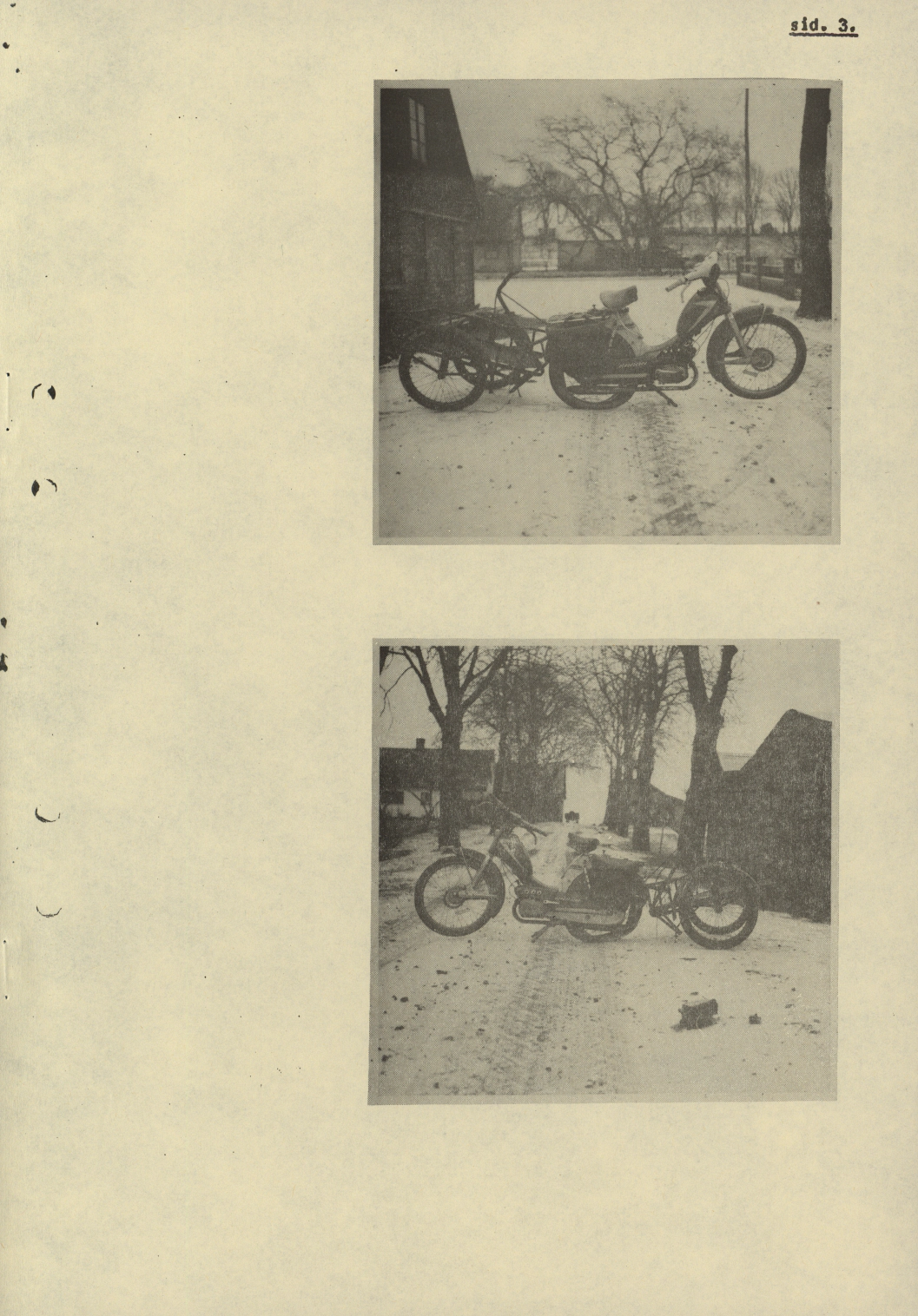
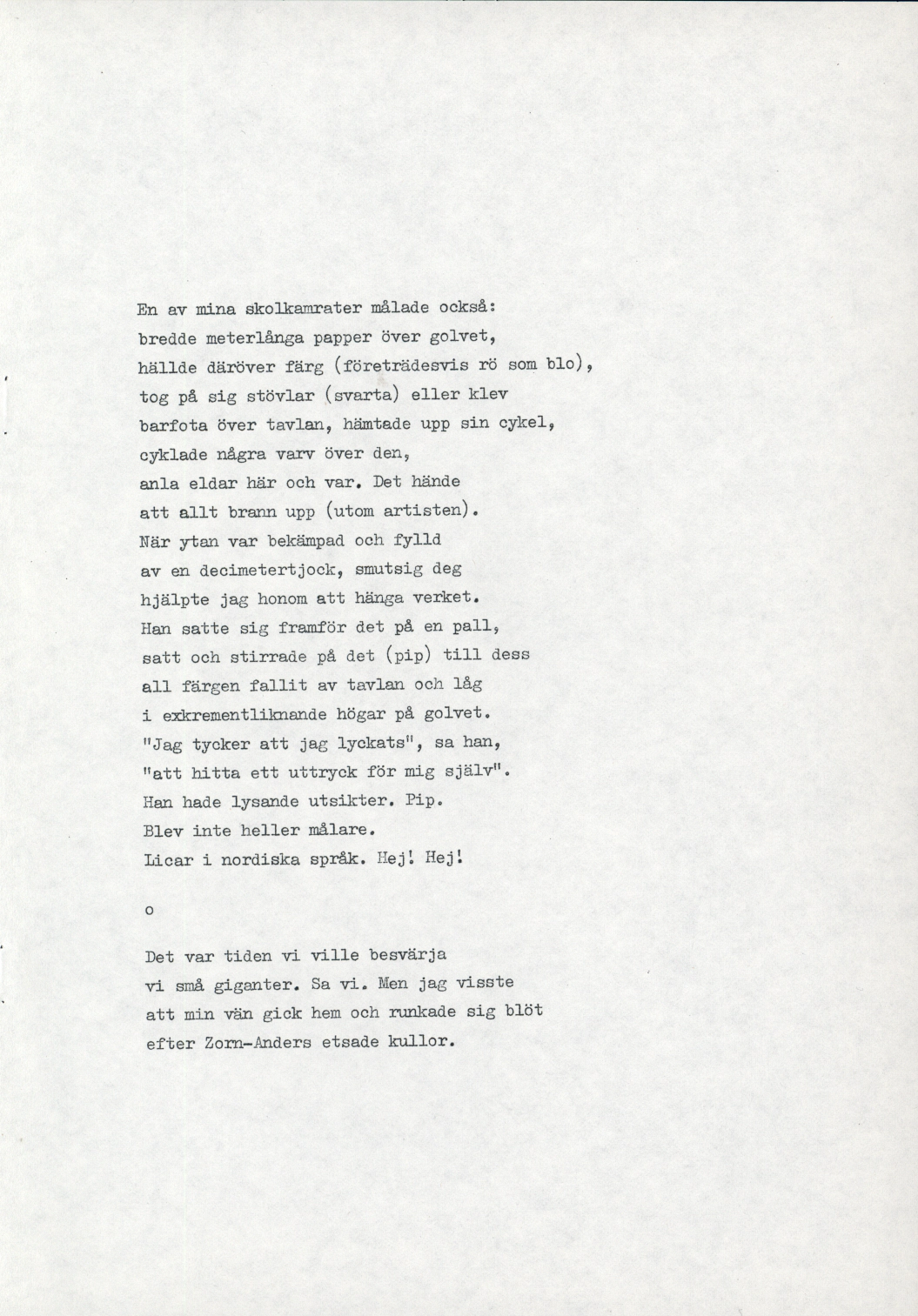
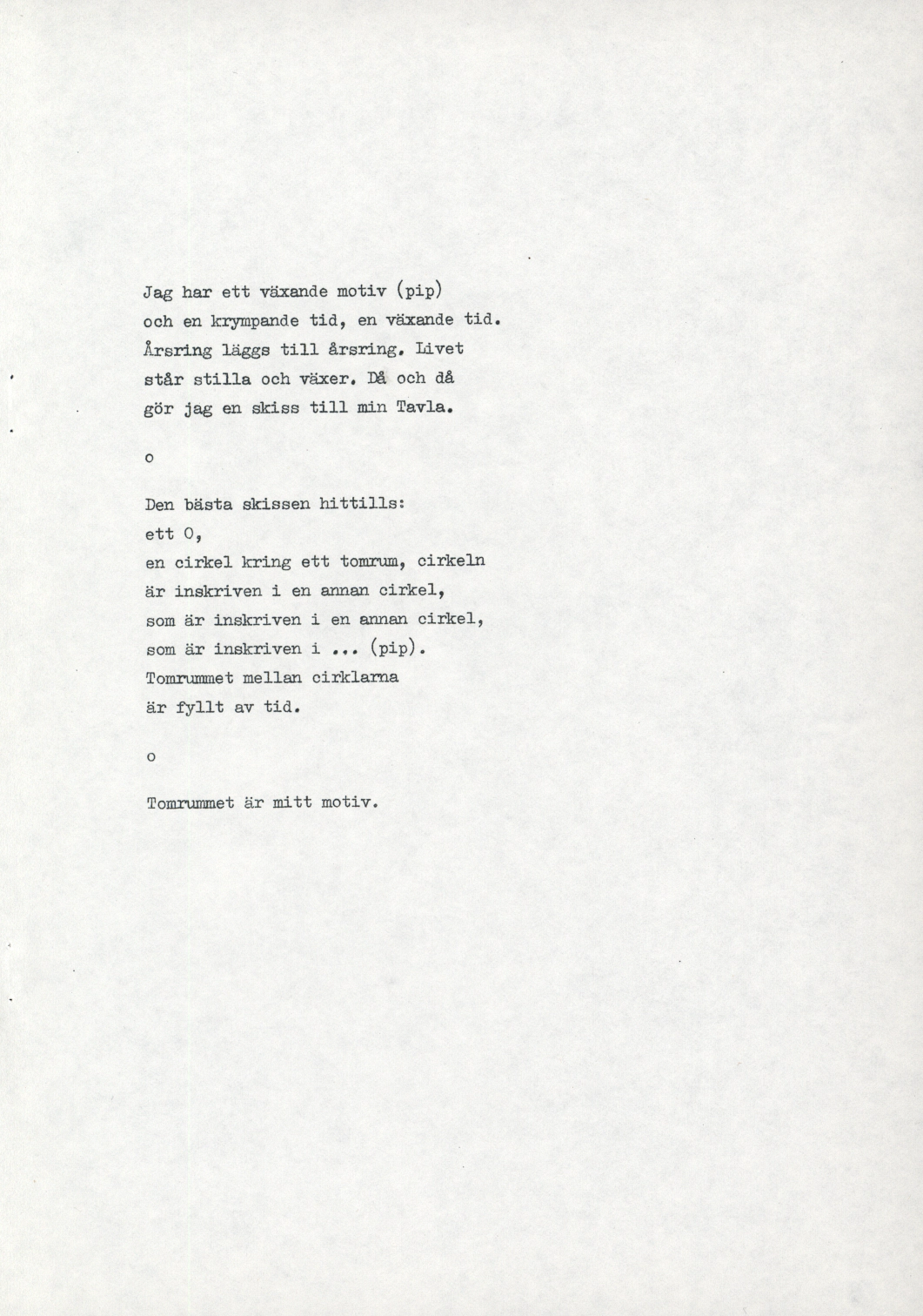
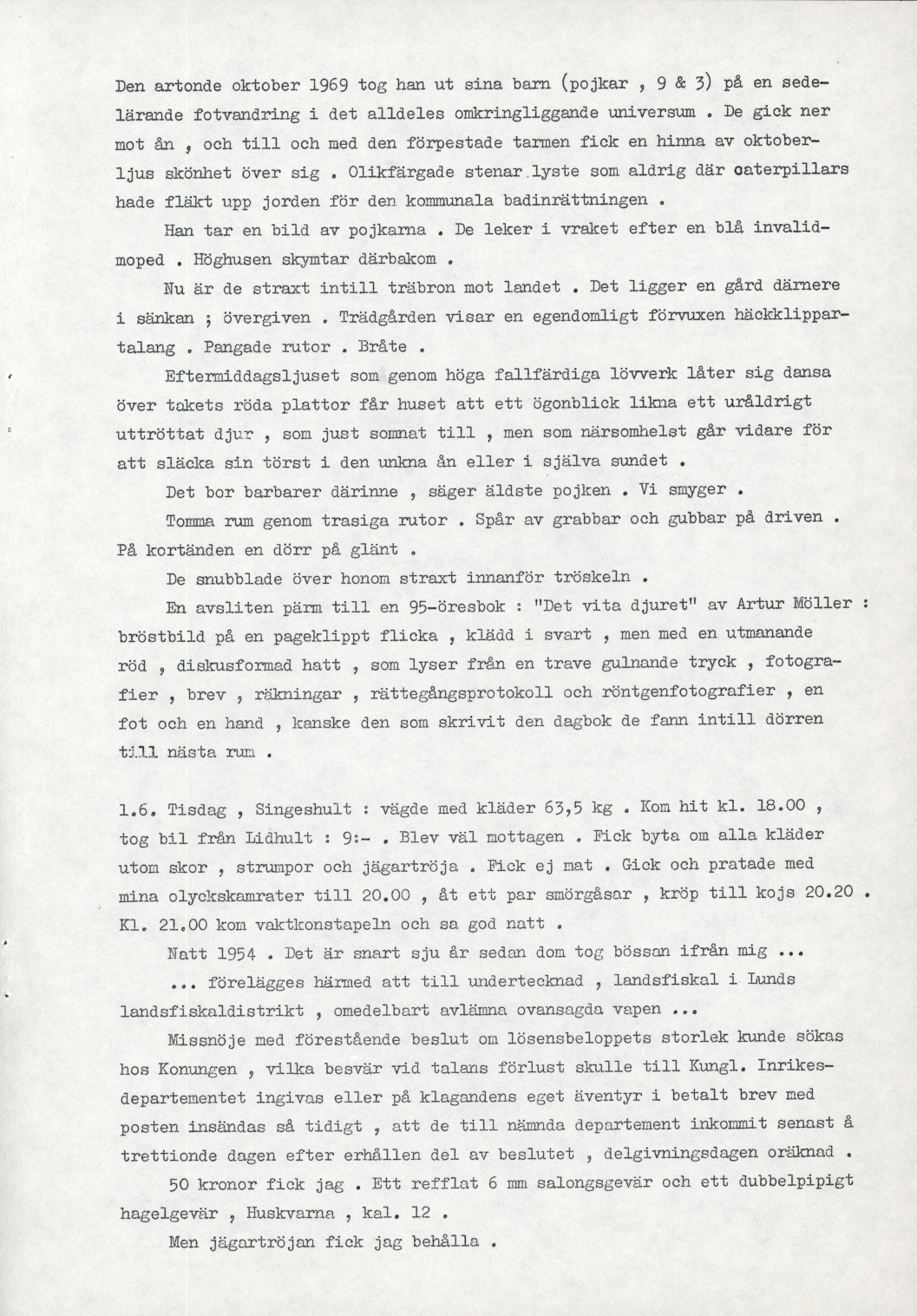
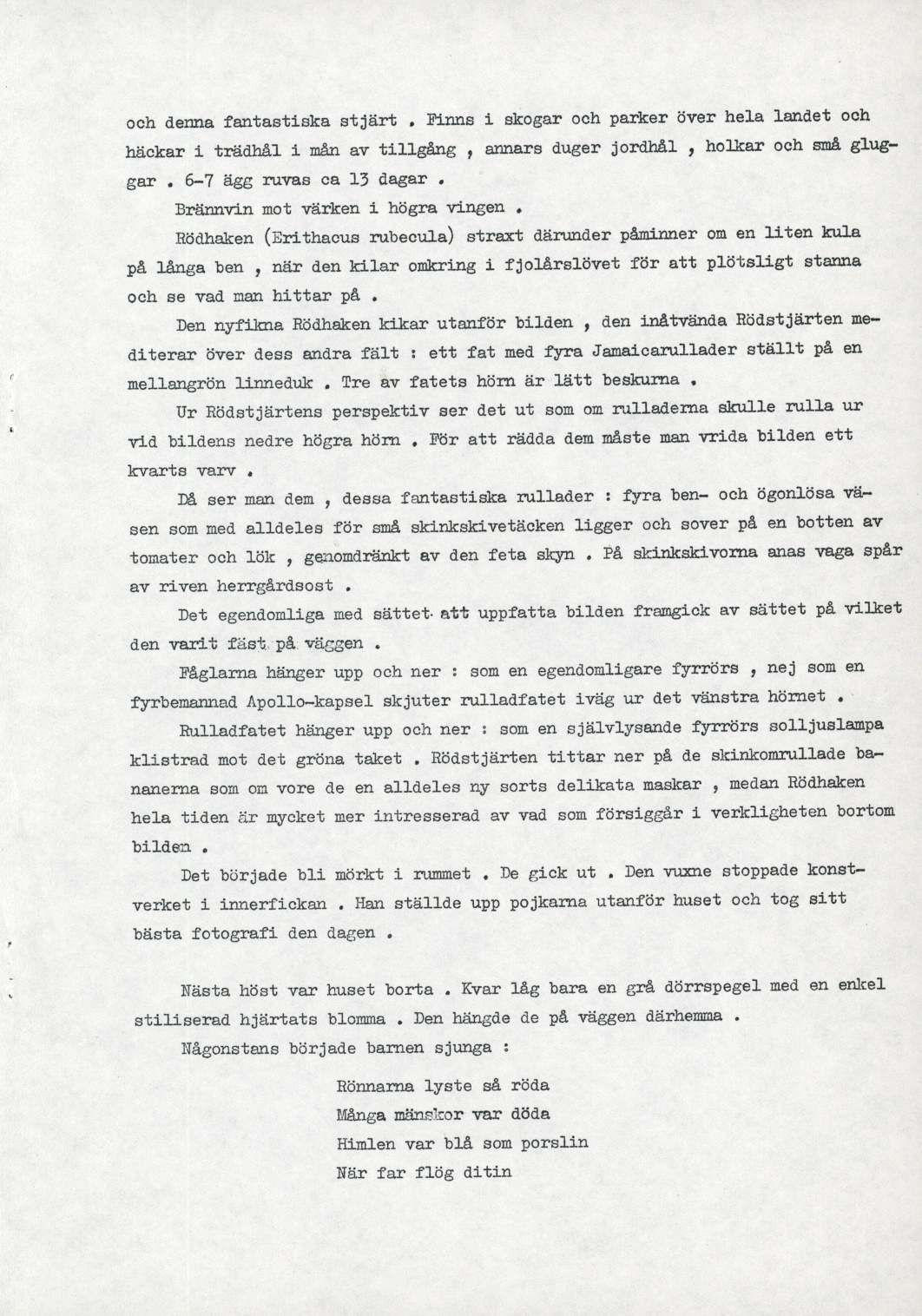
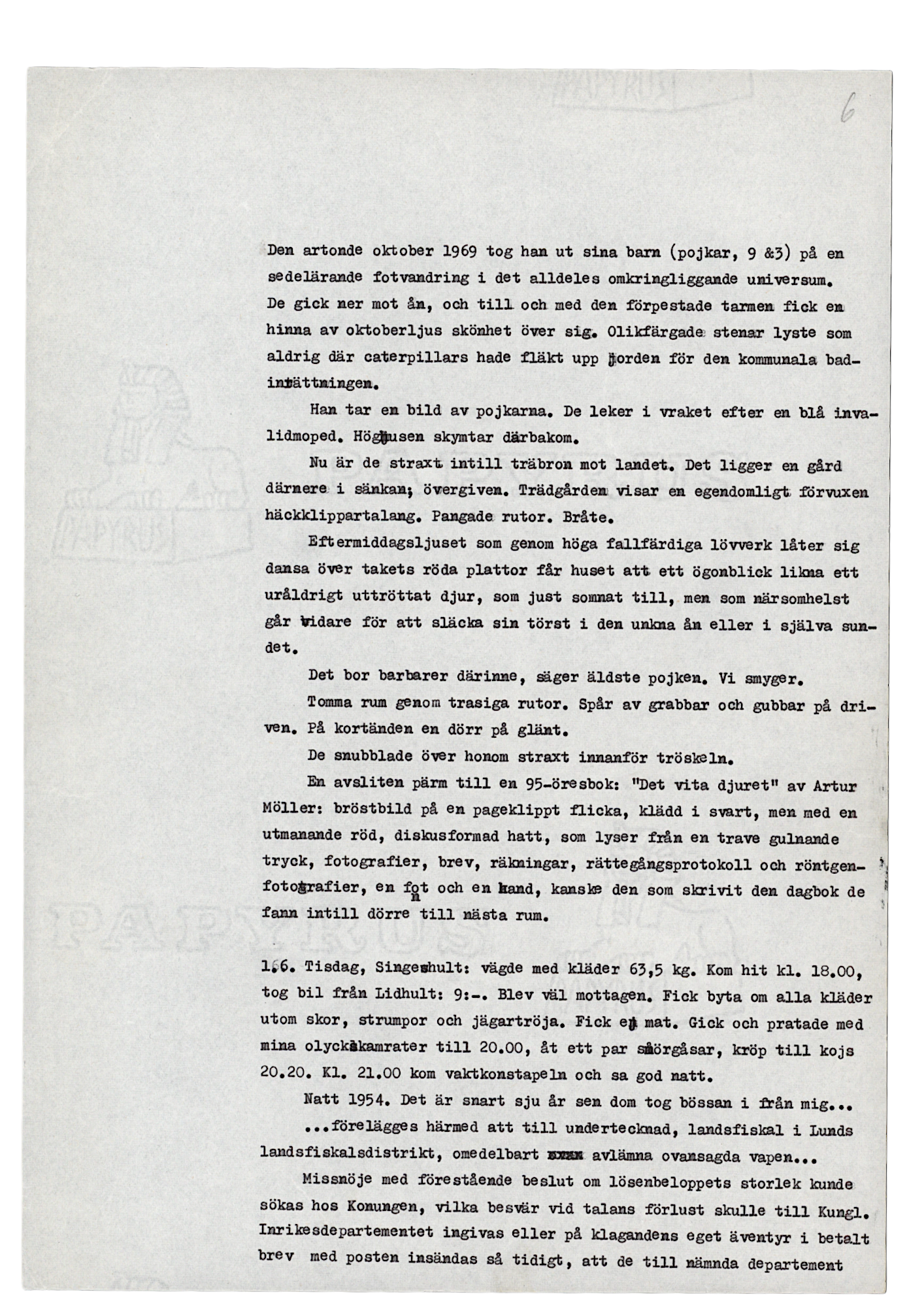
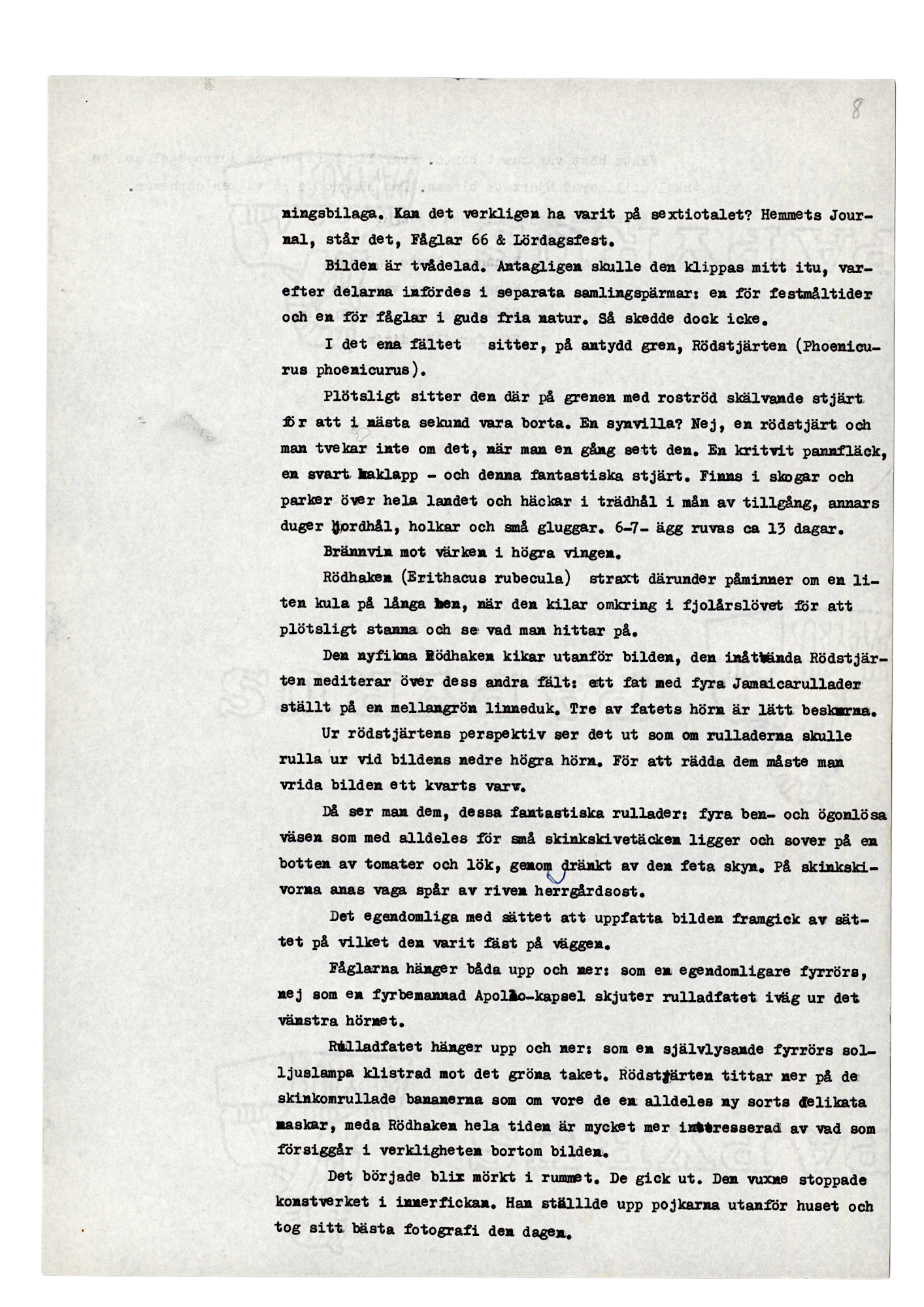
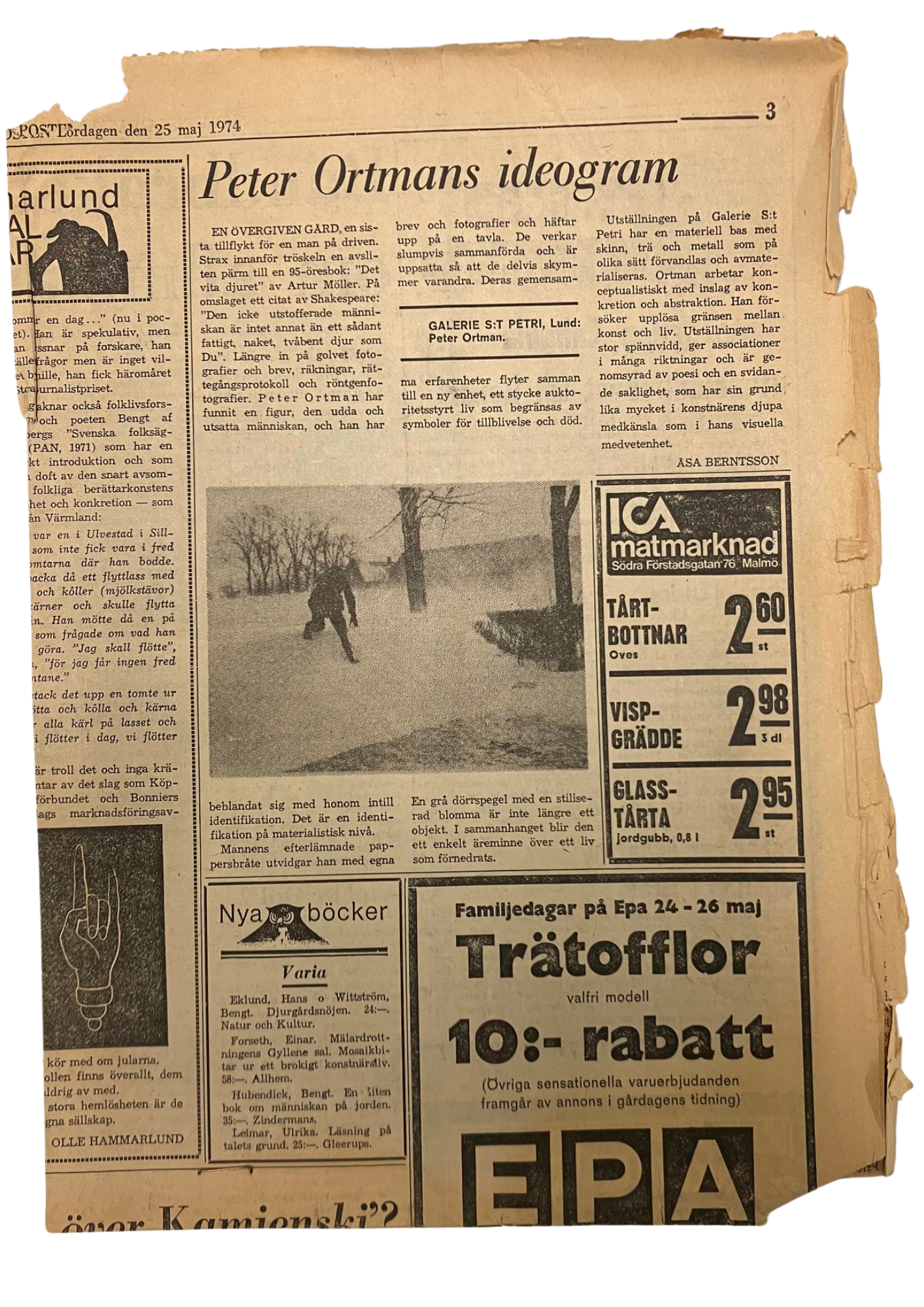
[JEANSELLEM VIEWER] — PETER ORTMAN IDEOGRAM 17-29.05.1974 — Categories: docs, visual, press — Keywords: Galerie S:t Petri, Jean Sellem, archive — Category: docs — Galerie S:t PetriS:t Petri Kyrkogata 5P.O. Box 7221 01 Lund 1SwedenTel. 046-14 78 00From 17 to 29 May 1974, the poet PETER ORTMAN is exhibiting at Galerie S:t Petri, Lund. For the first time, Peter Ortman appears as a visual artist.His literary debut came already at the age of twelve with “The Horror Man in the Devil’s Tower”, written under the pseudonym Risotto Ravioli together with B. O. Edström. Other collaborations include “The Phantom’s Secret Life” (1962), “Dear NN” (1966), “Watching Film” (1970), and “Writers and Film” (1970).Peter Ortman came to Lund in 1961, became editor of Vox in 1964 and that same year obtained a position at the Department of Comparative Literature, concentrating mainly on film and modern poetry. In 1967 his first poetry collection, “Privat O”, was published. Two years ago he began working with music and poetry together with the Werup-Sjöström group and at the same time initiated the music group Singoalla. He also works as a literary critic for Sydsvenska Dagbladet.About his works in the Lund exhibition, he says in a little aside:Hand and eyeYes & NoThe child scans the heightsPerhaps it will get over itThe Power and the GloryWaiting in the Jaws of TomorrowWhat is it that I am showing?Images of fixation and objects in which I have found myself — which have found themselves in me over the years? Which exist in themselves? Yes and No?Jean Sellem called me a conceptualist when he asked me to try to fill Galerie S:t Petri, but in my perforated innocence I think I have understood that it was he who is Conceptua....Indeed. O Art. O Constract. Constract O. Constractoalism....An unsolicited opportunity to take the whole thing for what it is not ...When words fail us, as usual, we greet youWith a warm handPeter Ortman — — — Category: docs — <p>Top-right image: original typescript of the text reproduced in the press release.</p> — A LITTLE ASIDEHand and eyeYes & NoThe child peers into the heightsPerhaps it will get over itThe Power and the GloryWaiting in Tomorrow’s Jaws+What is it that I show?Fixation images and objects in which I have found myself — which have found themselves in me over the years? Which exist in themselves?Yes and No?Jean Sellem called me a conceptualist when he asked me to try to fill Galerie S:t Petri, but in my perforated innocence I think I have understood that it is not he who is Con-ceptua...Certainly. O Art. O Constract. Constract O. Con-stractualism...An uncontrived opportunity to take the whole thing for what it is not...When words fail us, as usual, we send our greetings.With a warm handPETER ORTMAN — — — Category: docs — <p>Text by the artist, reproduced in the press release.</p> — A LITTLE ASIDEHand and eyeYes & NoThe child peers into the heightsPerhaps it will get over itThe Power and the GloryWaiting in Tomorrow’s Jaws+What is it that I show?Fixation images and objects in which I have found myself — which have found themselves in me over the years? Which exist in themselves?Yes and No?Jean Sellem called me a conceptualist when he asked me to try to fill Galerie S:t Petri, but in my perforated innocence I think I have understood that it is not he who is Con-ceptua...Certainly. O Art. O Constract. Constract O. Con-stractualism...An uncontrived opportunity to take the whole thing for what it is not...When words fail us, as usual, we send our greetings.With a warm handPETER ORTMAN — — — Category: visual — 25 May 1974Peter Ortman’s IdeogramAN ABANDONED FARM, a final refuge for a man adrift. Just inside the threshold lies a torn cover from a 95-öre book: “The White Animal” by Artur Möller. On the cover, a quotation from Shakespeare: “Unaccommodated man is no more but such a poor, bare, forked animal as thou art.” Farther in, on the floor, are photographs and letters, bills, court records and X-ray photographs. Peter Ortman has found a figure, the odd and vulnerable human being, and has mingled with him to the point of identification. It is an identification on a materialist level.He adds his own letters and photographs to the man’s abandoned paper debris and pins them to a board. They appear to have been brought together at random and are arranged so that they partly obscure one another. Their shared experiences merge into a new entity, a fragment of authority-governed life bounded by symbols of coming into being and death.GALERIE S:T PETRI, Lund:Peter Ortman.A grey door panel with a stylized flower is no longer an object. In this context it becomes a simple memorial to a life that has been degraded.The exhibition at Galerie S:t Petri has a material basis in leather, wood and metal, which are transformed and dematerialized in various ways. Ortman works conceptually, with elements of concretion and abstraction. He attempts to dissolve the boundary between art and life. The exhibition has a broad range, evokes associations in many directions and is permeated by poetry and a searing matter-of-factness, grounded as much in the artist’s deep compassion as in his visual awareness.ÅSA BERNTSSON — On 18 October 1969 he took his children (boys, 9 & 3) on an edifying walk through the universe immediately surrounding them. They went down towards the river, and even the polluted gut acquired a film of October-light beauty. Stones of different colours glowed like fire where Caterpillar machines had torn up the earth for the municipal baths.He takes a picture of the boys. They are playing in the wreck of a blue invalid moped. The high-rise buildings can be glimpsed behind them.Now they are right beside the wooden bridge towards the countryside. Down in the hollow lies a farm; abandoned. The garden displays an oddly overgrown talent for hedge-clipping. Smashed windows. Debris.The afternoon light, dancing through the tall, dilapidated foliage over the roof’s red tiles, makes the house for a moment resemble an ancient, exhausted animal that has just fallen asleep, but which at any moment may move on to quench its thirst in the stagnant river or in the sound itself.There are barbarians living in there, says the older boy. We sneak in.Empty rooms behind broken windows. Traces of boys and old men drifting through. At the narrow end, a door ajar.They stumbled over him just inside the threshold.A torn-off cover from a 95-öre book: “The White Animal” by Artur Möller: a bust portrait of a bob-haired girl, dressed in black but wearing a defiantly red, disc-shaped hat, glowing from a pile of yellowing printed matter, photographs, letters, bills, court records and X-rays; a foot and a hand, perhaps the one that wrote the diary they found beside the door to the next room.1.6. Tuesday, Singeshult: weighed 63.5 kg with clothes on. Arrived here at 6 p.m., took a car from Lidhult: 9 kronor. Was well received. Had to change all my clothes except shoes, socks and hunting sweater. Was given no food. Walked and talked with my fellow unfortunates until 8 p.m., ate a couple of sandwiches, crawled into bed at 8.20. At 9 p.m. the guard constable came and said good night.Night 1954. It is almost seven years since they took the gun away from me...... is hereby ordered to surrender immediately to the undersigned, district police chief of the Lund district, the above-mentioned weapons...Any dissatisfaction with the foregoing decision concerning the amount of compensation could be appealed to the King; such an appeal, on pain of forfeiting the right of appeal, was to be submitted to the Royal Ministry of the Interior or, at the complainant’s own risk, sent by registered letter early enough to reach the said ministry no later than the thirtieth day after receipt of the decision, the day of service not included.I got 50 kronor. A rifled 6 mm saloon rifle and a double-barrelled shotgun, Huskvarna, calibre 12.But I was allowed to keep the hunting sweater. — Inside the door, a much-abused blue-grey checked mattress. Now no one was lying there sighing for life. More papers, more letters. A photograph showing the young man when, dressed in gym shorts, thick woollen socks and well-polished military boots, he stands flexing his bird-muscles in front of a dark-grey blanket hung up to conceal the barrack-room door.A preliminary investigation report dating from almost forty years later: the old, wing-clipped man has crashed into the professor and his Mercedes-Benz.Four pictures — one of them a close-up of the rear wheel — show the moped and the trailer he had behind it, loaded with two sacks of boxwood, at 4.55 p.m. ... has no memory of the collision ... concussion, fracture of the right arm, right shoulder severely sprained, two fractured ribs on the right side, right collarbone broken ... as well as open wounds to the head.The pain in the bad side.The orthodox primary-school years.3.6. Thursday. Got up at 5.30. W.C. as usual, made the bed, tidied the room. Wrote a letter to Nachmansson. Good morning from the guard at 6.15. Planted cabbage as usual during the day. Sneaked away and looked in the stables. We have 40 head of cattle, of which 25 are dairy cows and 1 bull, 4 horses, 40 pigs and 1 large tractor. There are 160 tunnland of cultivated land and 30–40 tunnland of bog on which 8 men work. Lucky I haven’t ended up there, at least not yet.I have never been anywhere where I have seen and heard so many happy people. They sing, whistle, play, etc.The third room. The windows are nailed shut. Yet through the cracks the light rushes in trembling strands and reveals a half-naked wall.Look! He has put up a picture!The other rubbish on the floor was merely his life. Here his view of art is pinned to the wall.The picture is taken down and carried into the light. It is slightly larger than a postcard. Thumbtack marks reveal that it had been hung in every orientation but one. The text on the back shows that the picture had been included as a periodical supplement. Could it really have been in the sixties? Hemmets Journal, it says, Fåglar 66 & Lördagsfest.The picture is divided into two. Presumably it was intended to be cut in half, after which the parts would be placed in separate collectors’ binders: one for festive meals and one for birds in God’s free nature. But this was not done.In one field, sitting on a suggested branch, is the Common Redstart (Phoenicurus phoenicurus).Suddenly it is there on the branch with its rust-red trembling tail, only to be gone the next second. An optical illusion? No, a redstart, and once you have seen one you do not doubt it. A chalk-white patch on the forehead, a black bib — — — and that fantastic tail. Found in forests and parks throughout the country and nests in tree holes when available; otherwise holes in the ground, nest boxes and small openings will do. 6–7 eggs are incubated for about 13 days.Schnapps for the pain in the right wing.The Robin (Erithacus rubecula) just below it resembles a little ball on long legs as it scurries around in last year’s leaves, only to stop suddenly and see what one is up to.The curious Robin peers outside the picture; the inward-looking Redstart meditates on its other field: a plate with four Jamaica roulades placed on a medium-green linen cloth. Three of the plate’s corners are slightly cropped.From the Redstart’s perspective it looks as though the roulades are about to roll out at the lower right-hand corner of the picture. To save them, one must turn the picture a quarter turn.Then one sees them, these fantastic roulades: four legless and eyeless creatures, lying asleep with ham-slice blankets far too small for them on a bed of tomatoes and onions, drenched in the fatty gravy. On the slices of ham one can make out faint traces of grated Herrgård cheese.The peculiar way of perceiving the picture was revealed by the way in which it had been fixed to the wall.The birds hang upside down: like some strange four-tube contraption — no, like a four-man Apollo capsule, the roulade dish shoots off from the left-hand corner.The roulade dish hangs upside down: like a self-luminous four-tube sunlamp glued to the green ceiling. The Redstart looks down at the ham-wrapped bananas as though they were an entirely new kind of delicate worm, while the Robin remains much more interested in what is going on in reality beyond the picture.It began to grow dark in the room. They went out. The adult put the work of art in his inside pocket. He lined the boys up outside the house and took his best photograph of the day.The following autumn the house was gone. All that remained was a grey door panel with a simple stylised heart-shaped flower. They hung it on the wall at home.Somewhere the children began to sing:The rowan trees shone so redMany people were deadThe sky was blue as porcelainWhen father flew there — Photograph taken on 9 January 1964 by Senior Police Constable Lars FrankePage 2.Photograph showing the moped and the trailer. — — — Category: visual — <p>This sheet, together with the following three, constitutes the typescript of the text reproduced on pages 6 to 9 of the final publication.</p> — — — Category: visual — — — Category: visual — — — Category: visual — — — Category: visual — — — Category: docs — — — Category: docs — — — Category: press — — — Category: press — — — Category: press — 25 May 1974Peter Ortman’s IdeogramAN ABANDONED FARM, a final refuge for a man adrift. Just inside the threshold lies a torn cover from a 95-öre book: “The White Animal” by Artur Möller. On the cover, a quotation from Shakespeare: “Unaccommodated man is no more but such a poor, bare, forked animal as thou art.” Farther in, on the floor, are photographs and letters, bills, court records and X-ray photographs. Peter Ortman has found a figure, the odd and vulnerable human being, and has mingled with him to the point of identification. It is an identification on a materialist level.He adds his own letters and photographs to the man’s abandoned paper debris and pins them to a board. They appear to have been brought together at random and are arranged so that they partly obscure one another. Their shared experiences merge into a new entity, a fragment of authority-governed life bounded by symbols of coming into being and death.GALERIE S:T PETRI, Lund:Peter Ortman.A grey door panel with a stylized flower is no longer an object. In this context it becomes a simple memorial to a life that has been degraded.The exhibition at Galerie S:t Petri has a material basis in leather, wood and metal, which are transformed and dematerialized in various ways. Ortman works conceptually, with elements of concretion and abstraction. He attempts to dissolve the boundary between art and life. The exhibition has a broad range, evokes associations in many directions and is permeated by poetry and a searing matter-of-factness, grounded as much in the artist’s deep compassion as in his visual awareness.ÅSA BERNTSSON
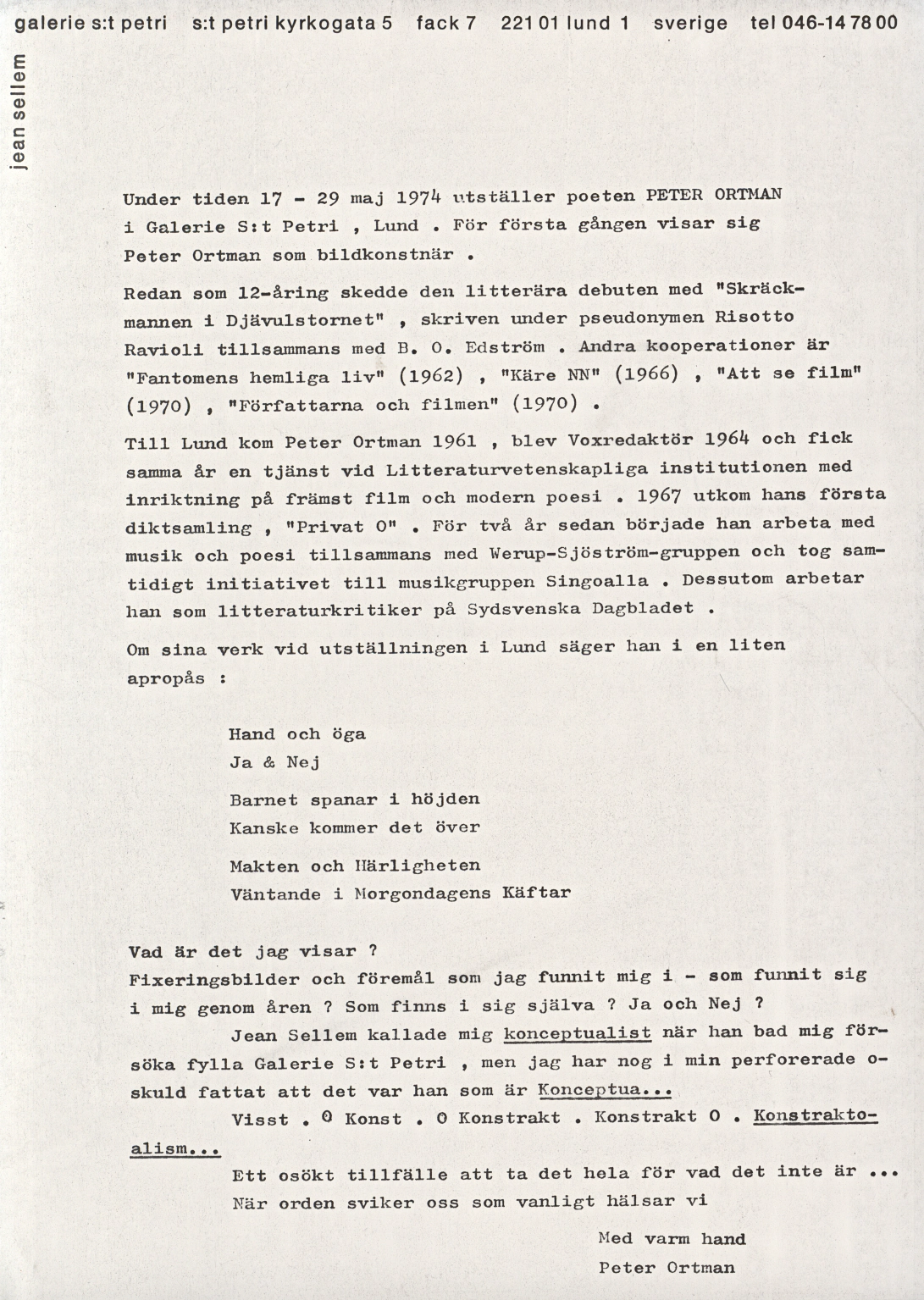
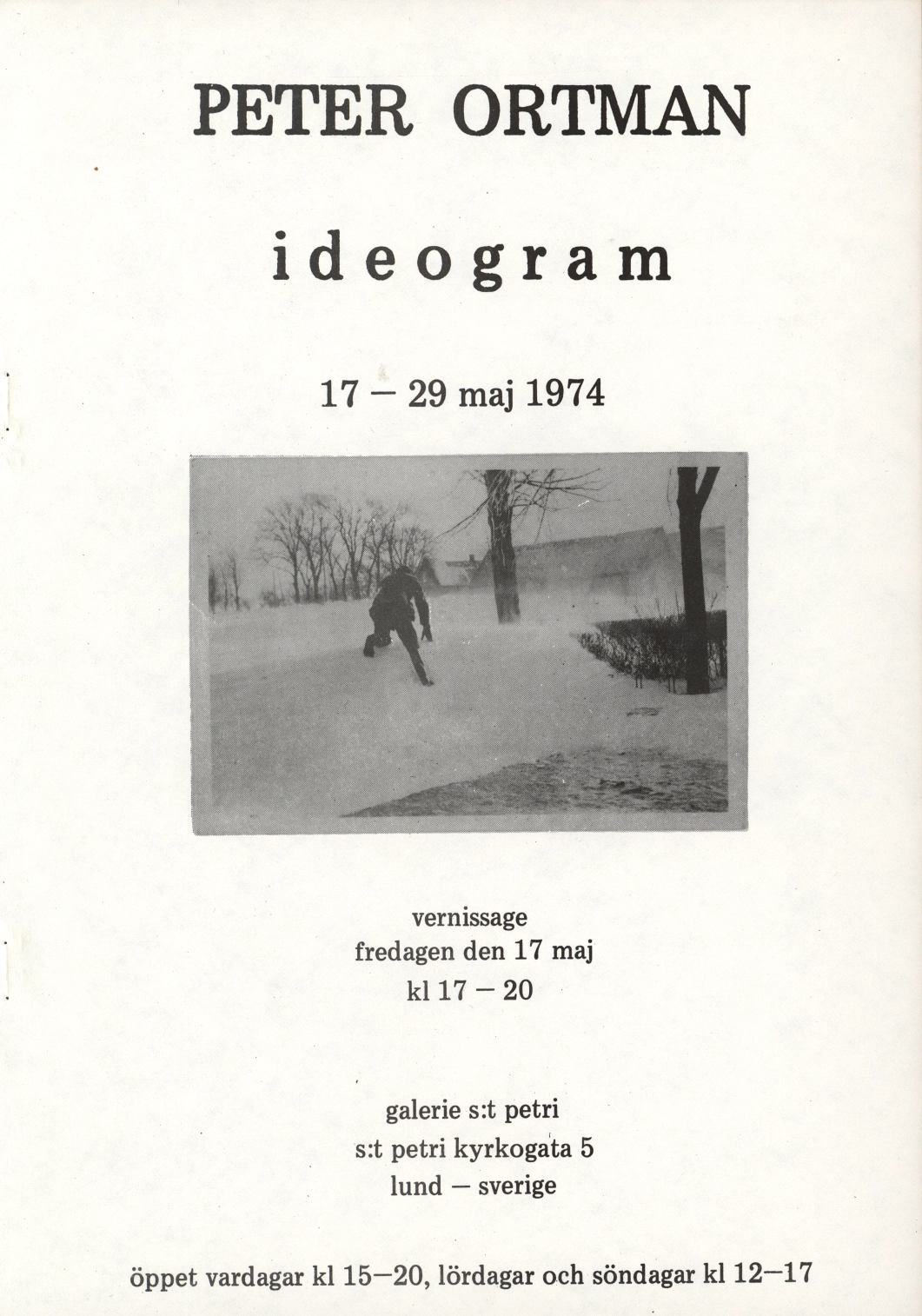
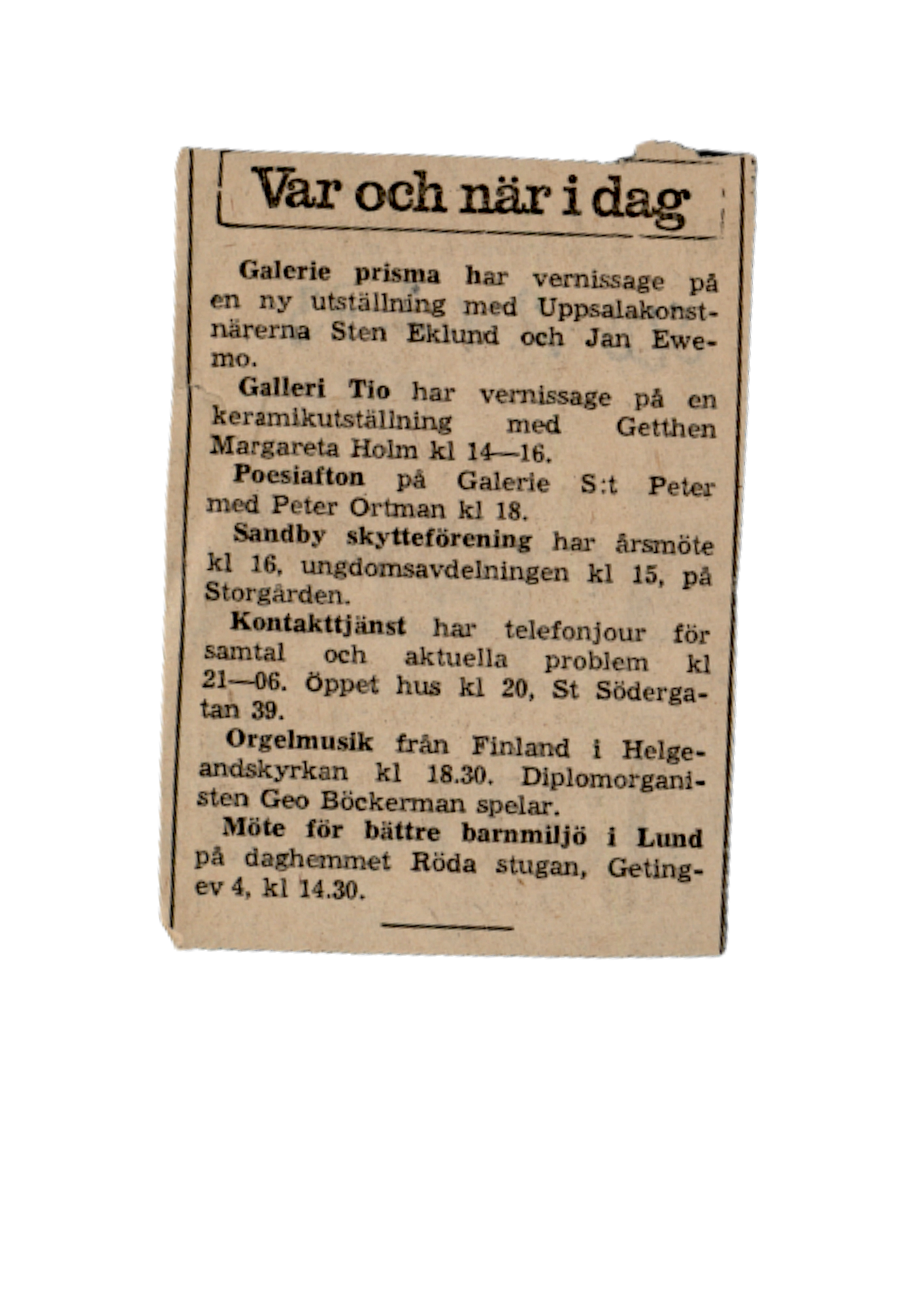
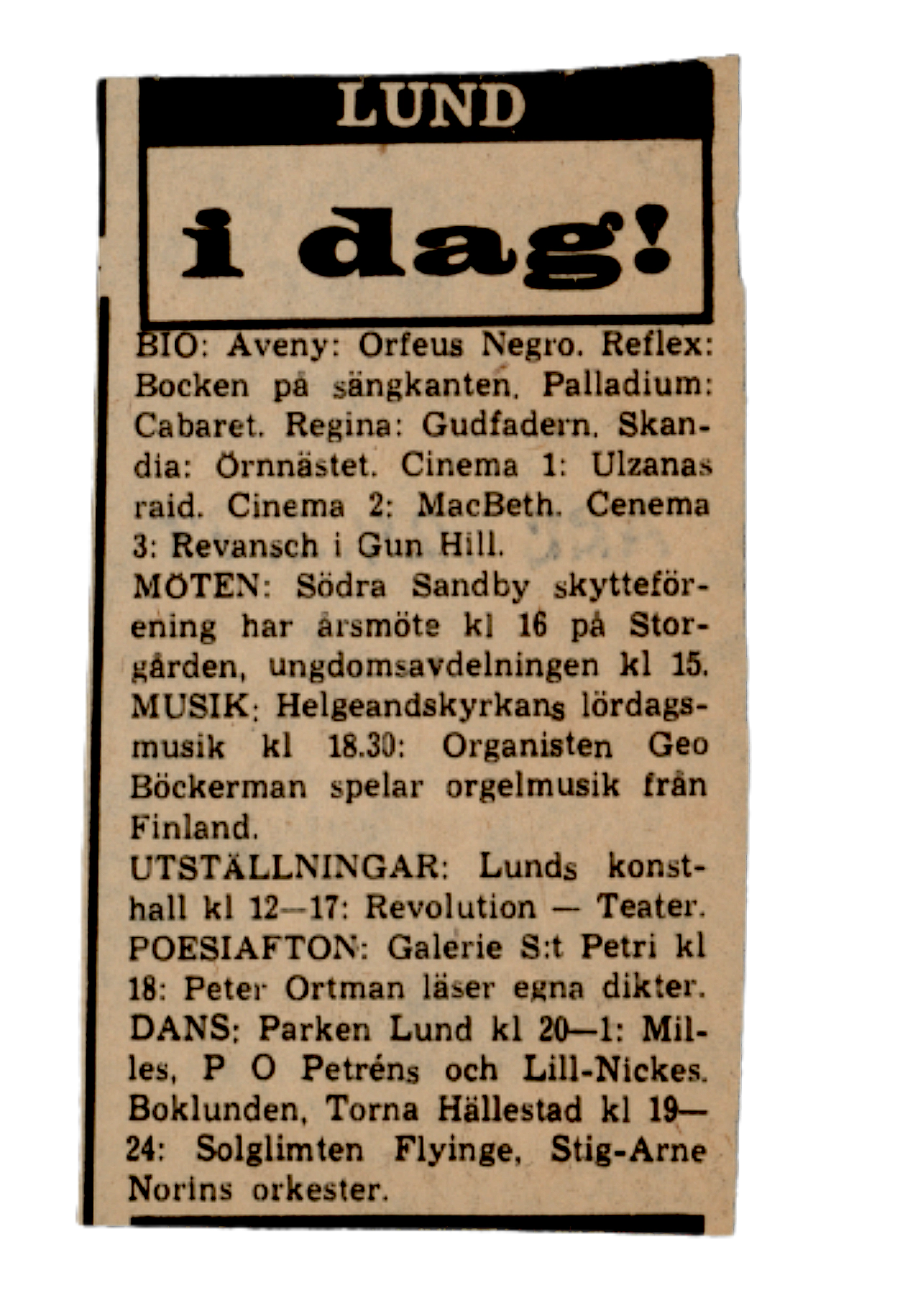
Between 17 and 29 May 1974 the poet PETER ORTMAN is exhibiting at Galerie S:t Petri, Lund. For the first time Peter Ortman appears as a visual artist.
Already at the age of twelve he made his literary debut with “The Horror Man in the Devil’s Tower,” written under the pseudonym Risotto Ravioli together with B. O. Edström. Other collaborations include “The Phantom’s Secret Life” (1962), “Dear NN” (1966), “To See Film” (1970), and “The Authors and the Film” (1970).
Peter Ortman came to Lund in 1961, became editor of Vox in 1964, and in the same year took a post at the Department of Comparative Literature with a focus mainly on film and modern poetry. In 1967 his first collection of poems, Privat O, was published. Two years ago he began working with music and poetry together with the Werup–Sjöström group, and at the same time he initiated the music group Singoalla. He also works as a literary critic for Sydsvenska Dagbladet.
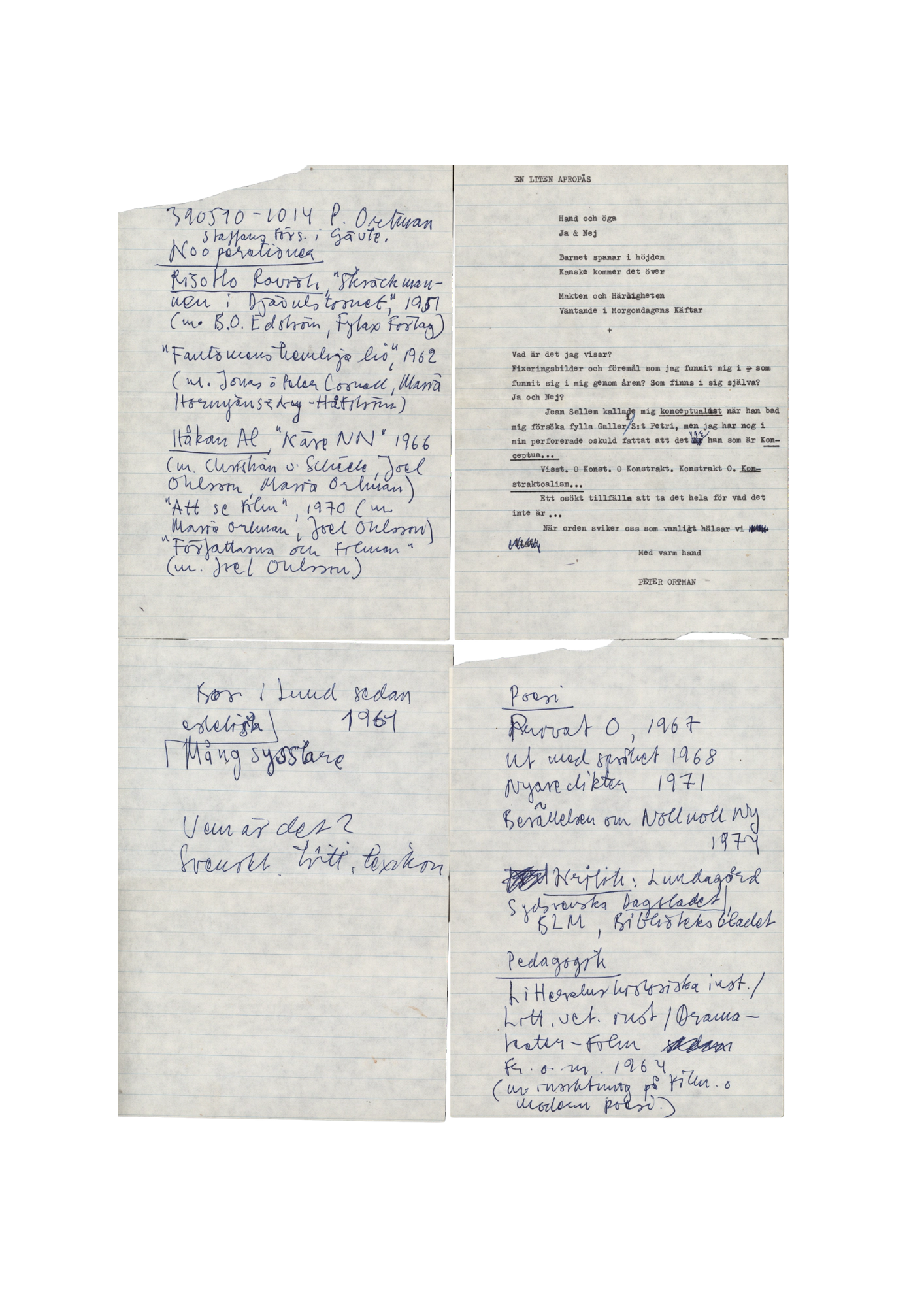
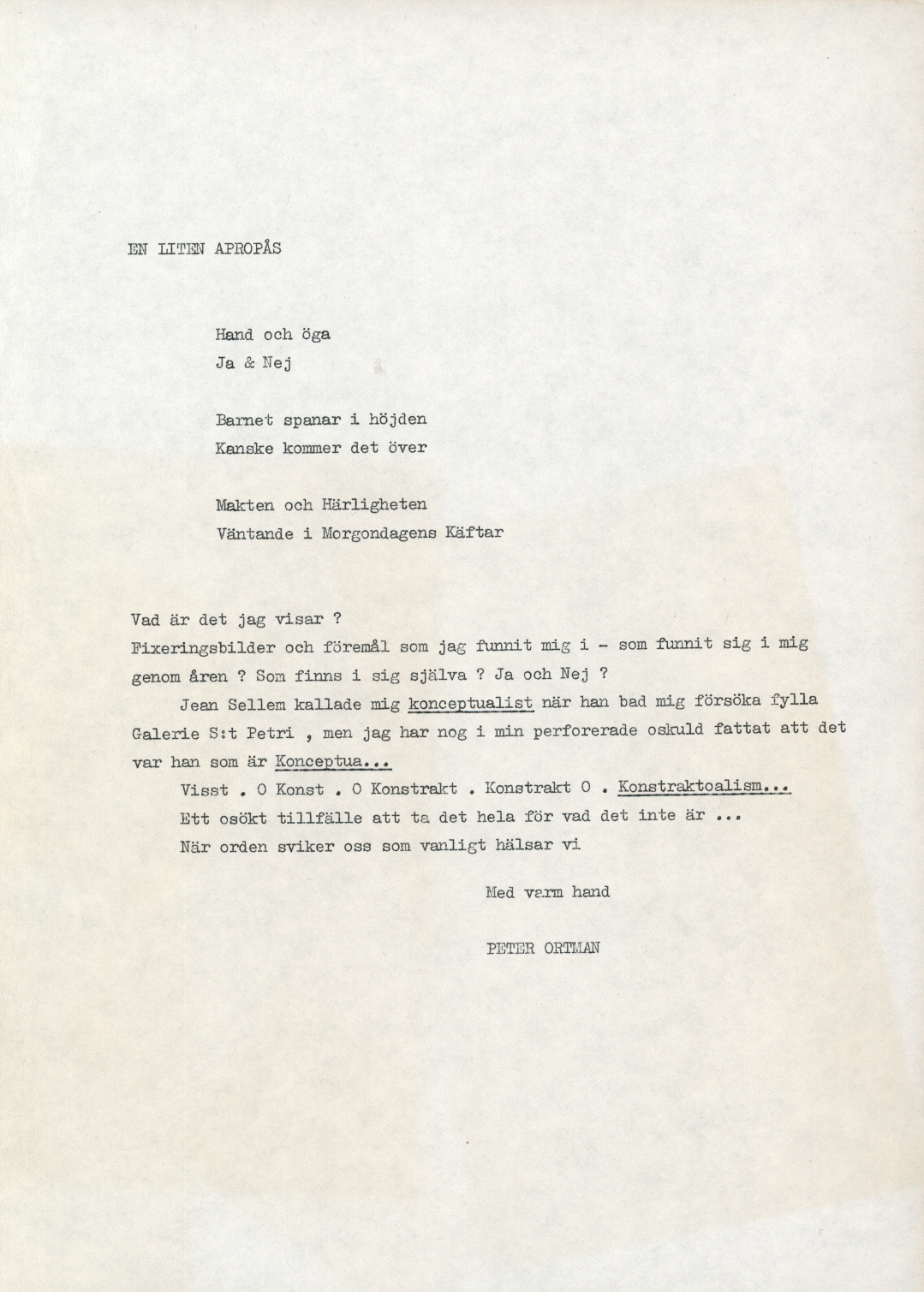
About the works shown in Lund he says in a brief “à propos”:
Hand and Eye Yes & No The Child Scans the Heights Perhaps It Will Get Over It The Power and the Glory Waiting in the Jaws of Tomorrow
What is it that I am showing? Fixation-images and objects I have come to accept—or that have settled in me—over the years? That exist in and of themselves? Yes and No?
Jean Sellem called me a conceptualist when he asked me to try to fill Galerie S:t Petri, but in my perforated innocence I have rather gathered that it is he who is the Conceptua… Sure. 0 Art. 0 Construct. Construct 0. Construc—talism…
An unforced opportunity to take the whole for what it is not … When words fail us, as usual, we send our greetings.