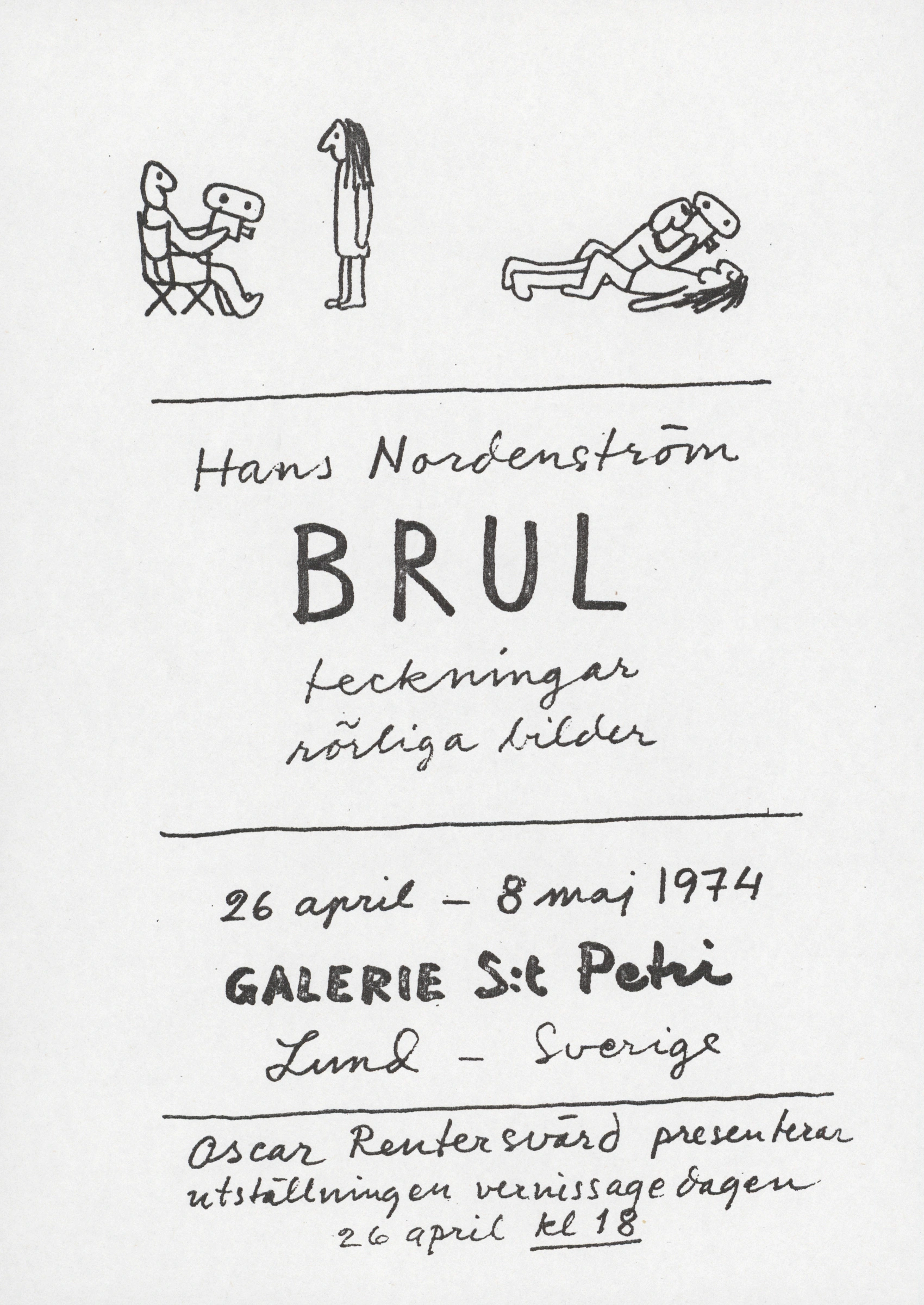
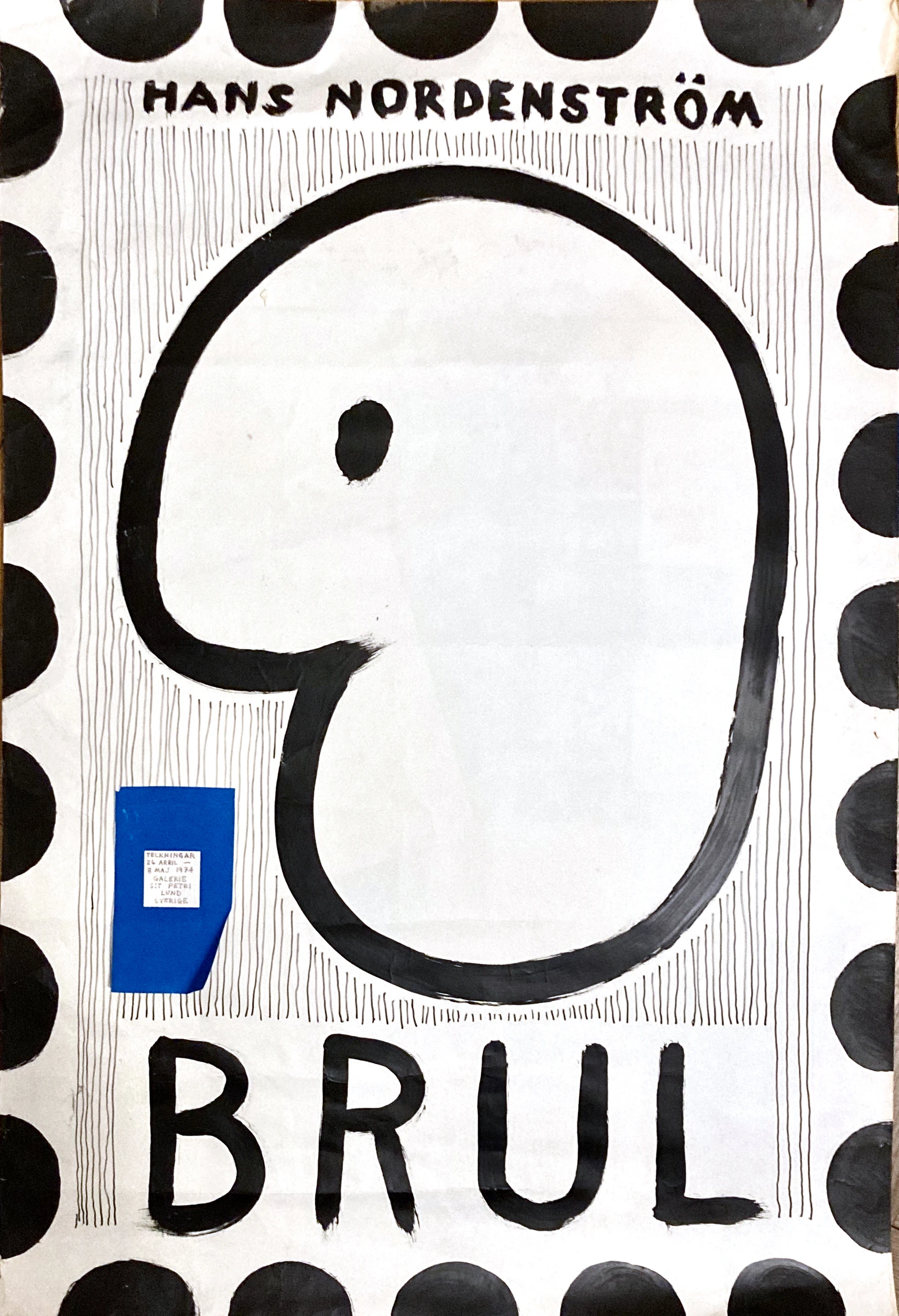
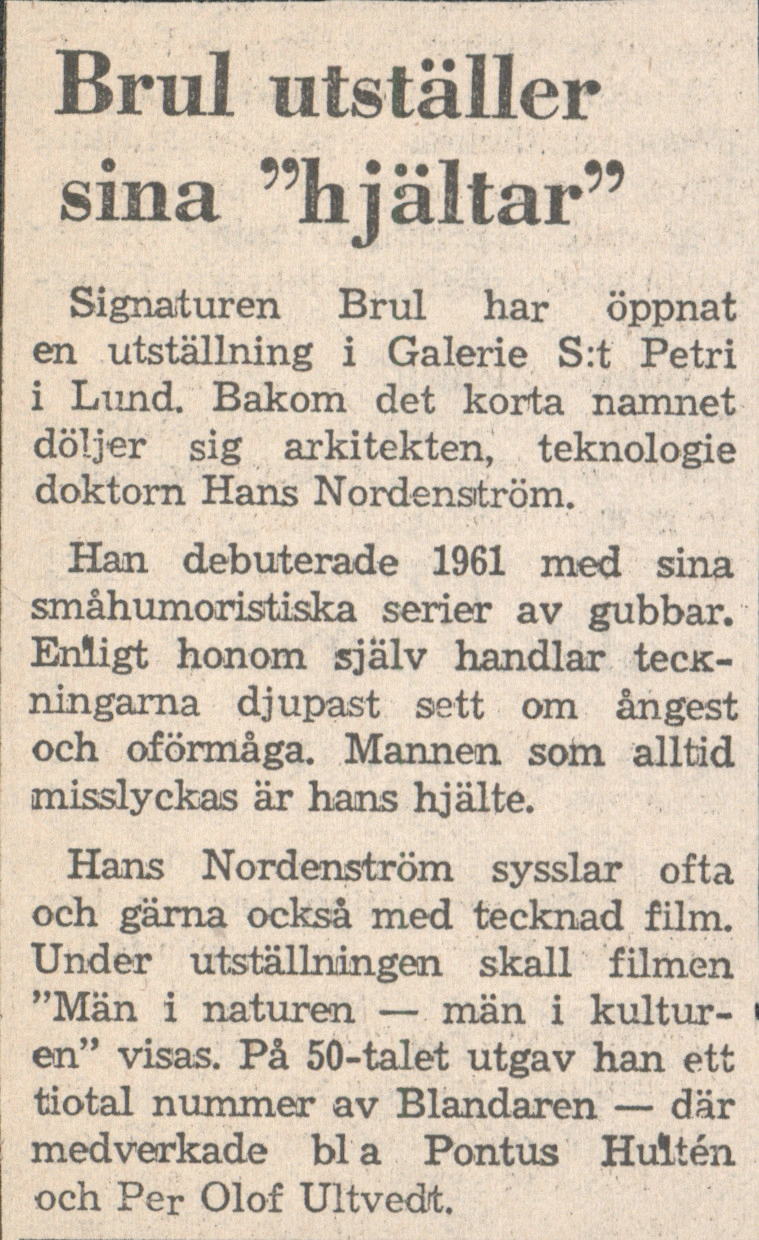
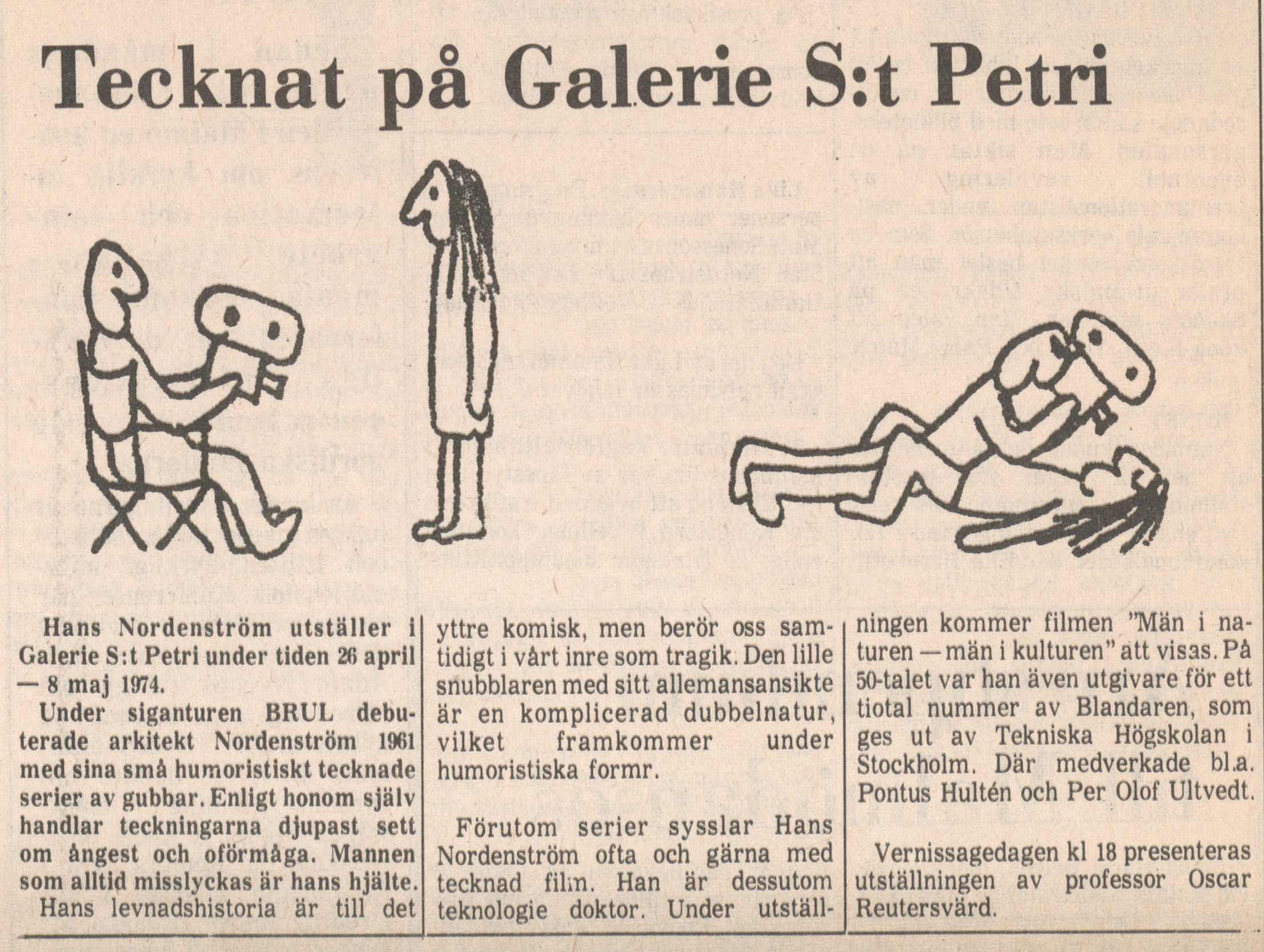
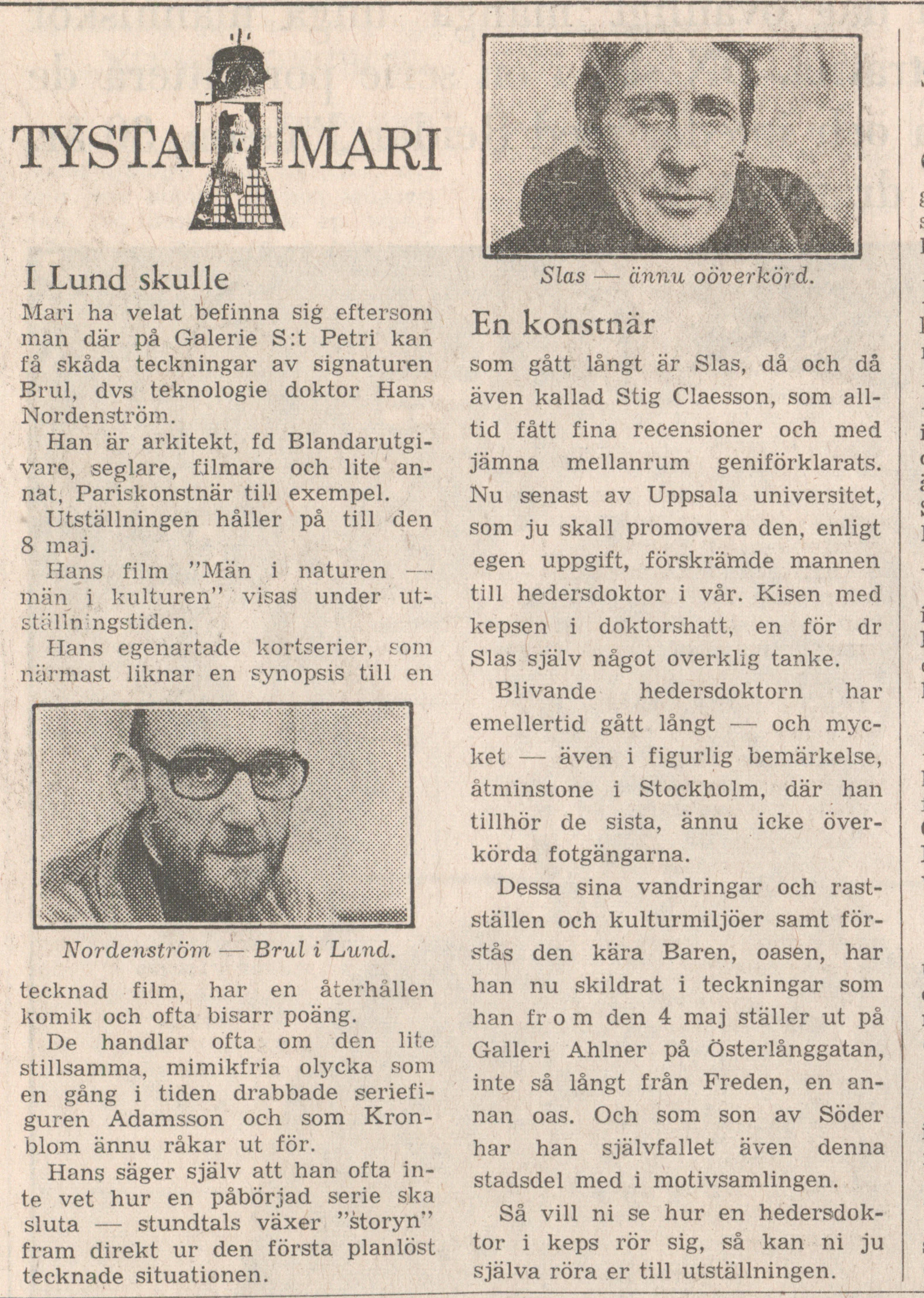
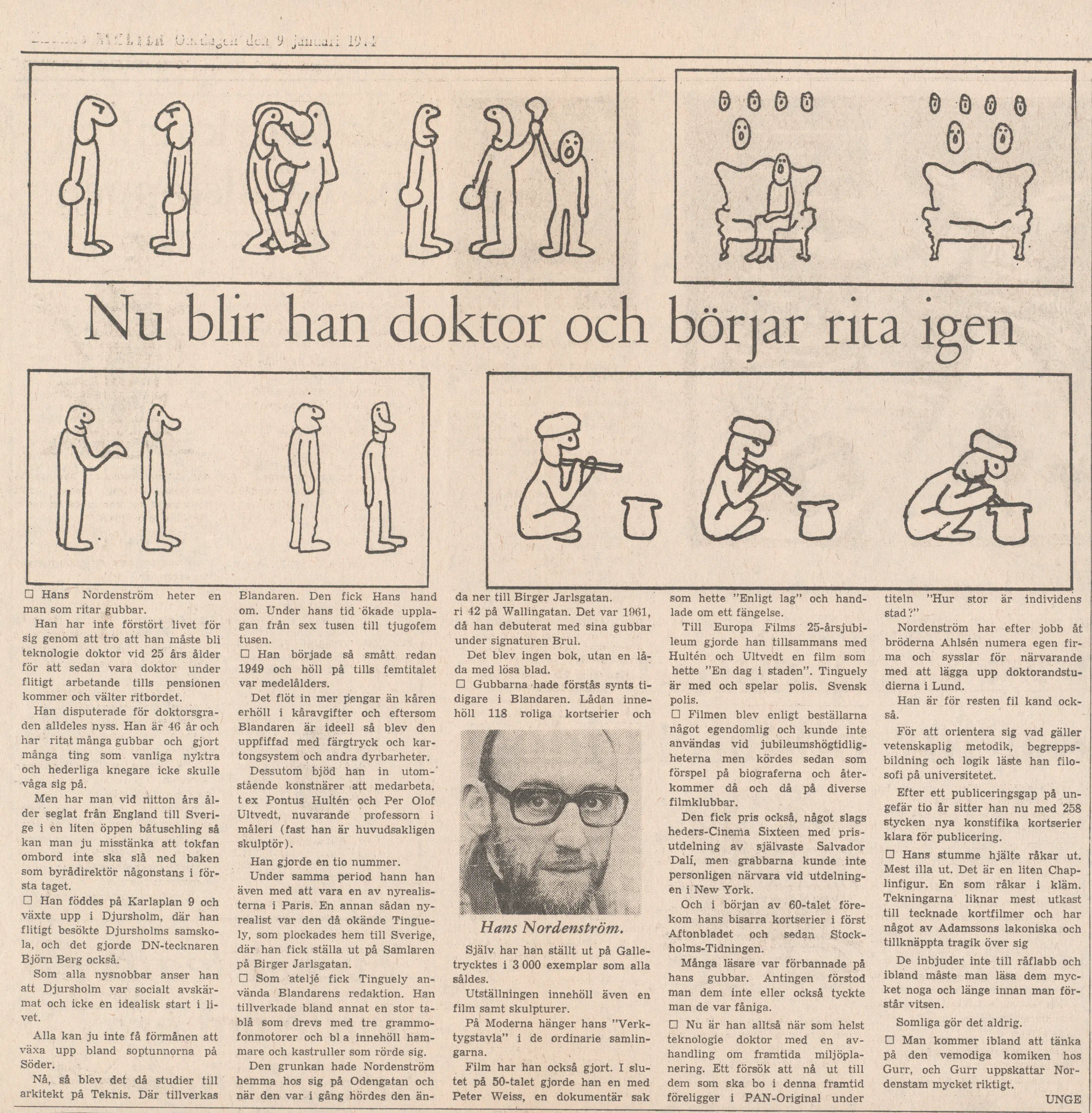
Under the signature BRUL, architect Hans Nordenström made his debut in 1961 with small, humorous drawings of little characters. According to the artist himself, these drawings deal, at their deepest level, with anxiety and inadequacy. The man who always fails is his hero. His life story is, outwardly, comic, but at the same time touches something tragic within us. The little stumbling figure with his everyman face is a complex double-nature, which emerges through humorous forms.
In the early 1960s, the book “A Box of Magic, or 118 Funny Stories” was published, in which Hans Nordenström appears in a small section titled “The Comedian and the Audience.” There he writes: “Perhaps you still dislike me. But now you are my adversaries, and I extend my long nose to you — resurrected for artistic purposes.”
Besides drawing comics, Hans Nordenström often and gladly works with animated film. He is also a Doctor of Technology. During the exhibition, his film “Man in Nature – Man in Culture” will be shown. In the 1950s he was also the publisher of around ten issues of Blandaren, released by the Royal Institute of Technology in Stockholm, where contributors included, among others, Pontus Hultén and Per Olof Ultvedt.
The exhibition will be presented at 6 PM on opening day by Professor Oscar Reuterswärd.
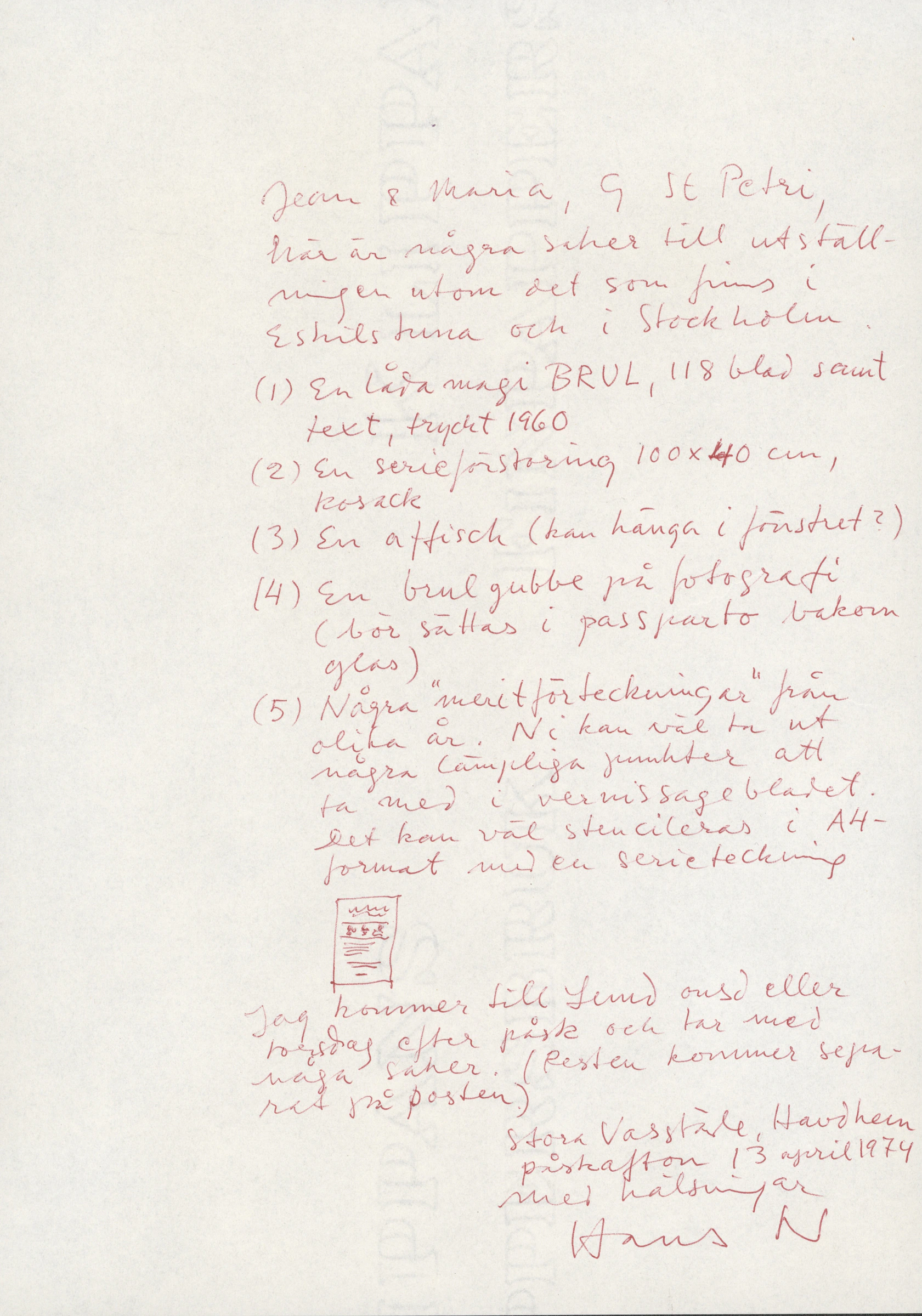
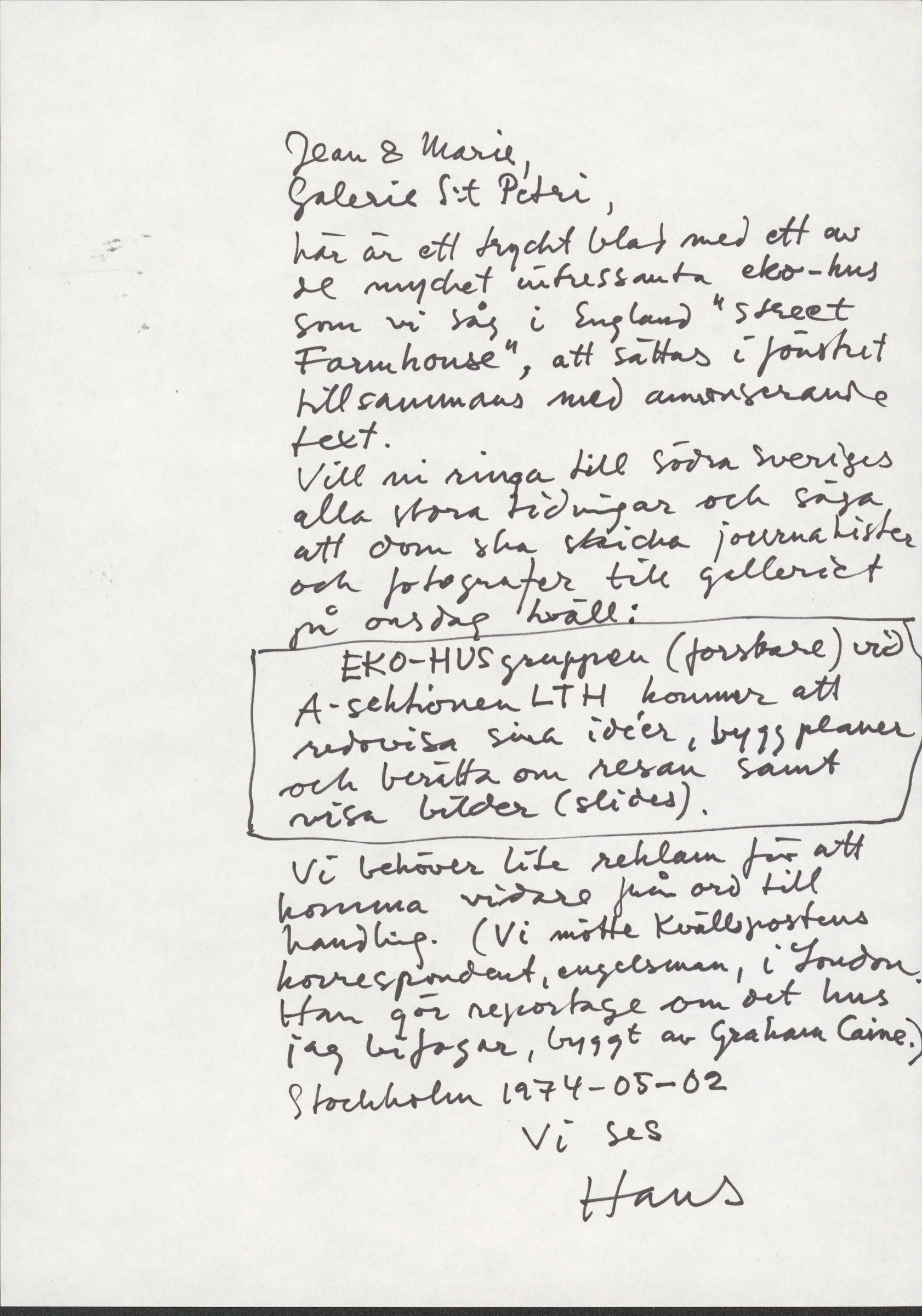
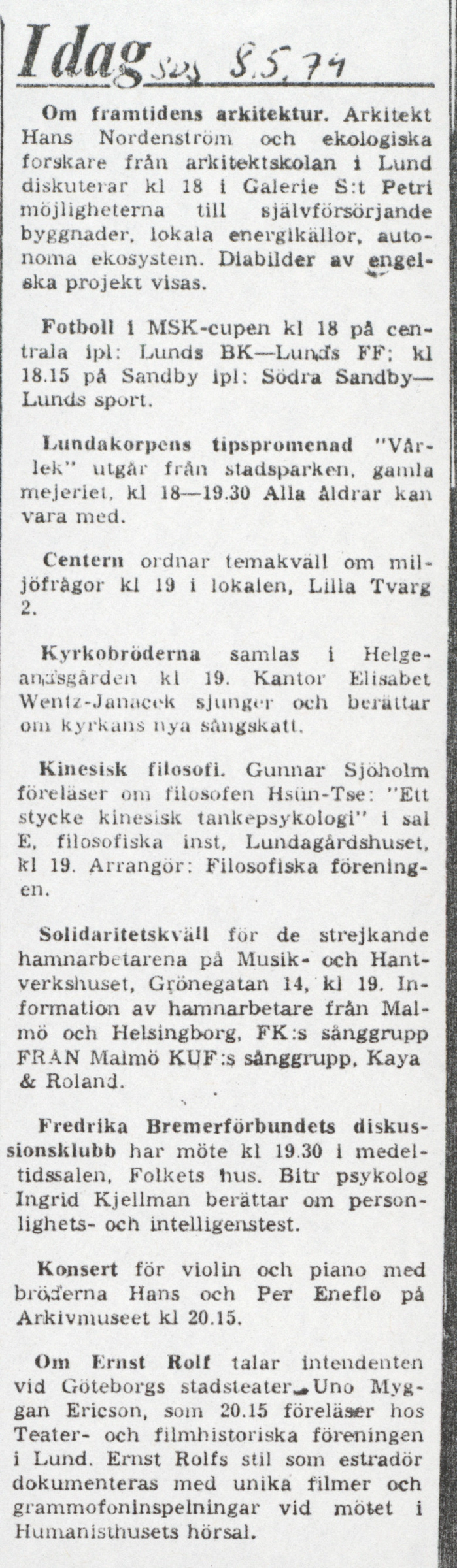
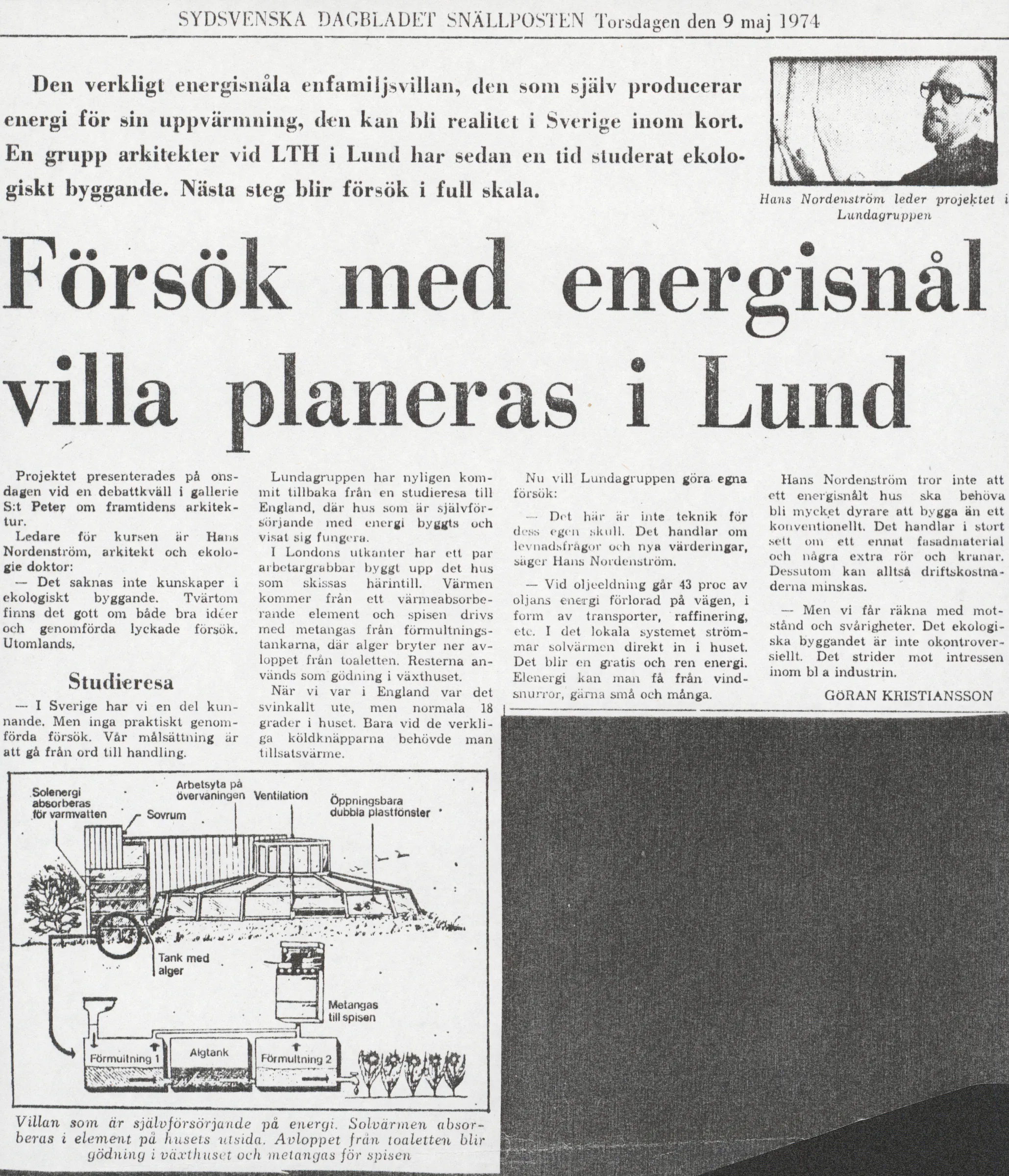
[JEANSELLEM VIEWER] — HANS NORDENSTRÓM BRUL 26.04-08.05.1974 — Categories: docs, letters, press — Keywords: Galerie S:t Petri, Jean Sellem, archive — Category: docs — HANS NORDENSTRÖM exhibits at Galerie S:t Petri from 26 April to 8 May 1974.Under the pseudonym BRUL, the architect Nordenström made his debut in 1961 with his small, humorously drawn comic strips featuring little men. According to Nordenström himself, at their deepest level the drawings deal with anxiety and incapacity. The man who always fails is his hero. His life story is outwardly comic, but at the same time touches us inwardly as tragedy. The little bungler with his everyman’s face is a complex dual nature, revealed through humorous forms.At the beginning of the 1960s, "En låda magi eller 118 olika roliga historier" ["A Box of Magic, or 118 Different Funny Stories"] was published, in which Hans Nordenström writes in a small leaflet entitled "Komikern och publiken" ["The Comedian and the Audience"]: "Perhaps I do not hate you after all. But you are my adversary, and I stick out my long nose at you, resurrected for artistic purposes."Besides comic strips, Hans Nordenström often and gladly works with animated film. He also holds a doctorate in technology. During the exhibition, the film "Män i naturen – män i kulturen" ["Men in Nature – Men in Culture"] will be shown. In the 1950s he was also the editor of around ten issues of Blandaren, published by the Royal Institute of Technology in Stockholm. Contributors included Pontus Hultén and Per Olof Ultvedt.On the opening day at 6 p.m., the exhibition will be introduced by Professor Oscar Reutersvärd. — — — Category: docs — — — Category: docs — — — Category: letters — <p><span style="color: rgb(17, 17, 17);">13 April 1974</span></p> — Jean & Maria, G. S:t Petri,Here are a few things for the exhibition, apart from what is in Eskilstuna and Stockholm.1) A box with BRUL, 118 sheets and text, printed 1960.2) An enlargement of a comic strip, 100 × 40 cm, Cossack.3) A poster (can it hang in the window?).4) A BRUL figure in a photograph (should be mounted in a passe-partout behind glass).5) Some “curricula vitae” from different years. You could perhaps select a few suitable points to include in the opening sheet. It could perhaps be stencil-printed in A4 format with a comic drawing.I will come to Lund on Wednesday or Thursday after Easter and bring a few things with me. (The rest will come separately by post.)(illisible), Easter Eve, 13 April 1974Best regards,Hans N. — — — Category: letters — <p><span style="color: rgb(17, 17, 17);">02.05.1974</span></p> — Jean & Marie,Galerie S:t Petri,Here is a printed sheet showing one of the very interesting eco-houses we saw in England, “Street Farmhouse”, to be put in the window together with an announcement text.Could you call all the major newspapers in southern Sweden and tell them to send journalists and photographers to the gallery on Wednesday evening:The ECO-HOUSE group (researchers) at the A-section of LTH will present their ideas and building plans, talk about the trip, and show pictures (slides).We need a little publicity in order to move forward from words to action. (We met Kvällsposten’s correspondent, an Englishman, in London. He is preparing a report on the house I am enclosing, built by Graham Caine.)Stockholm, 1974-05-02See you,Hans — — — Category: docs — — — Category: press — Brul exhibits his “heroes”The artist using the signature Brul has opened an exhibition at Galerie S:t Petri in Lund. Behind this short name is the architect and Doctor of Technology Hans Nordenström.He made his debut in 1961 with his mildly humorous cartoon series of little men. According to Nordenström himself, the drawings are, at their deepest level, about anxiety and incapacity. The man who always fails is his hero.Hans Nordenström also often and gladly works with animated film. During the exhibition, the film “Men in Nature — Men in Culture” will be shown. In the 1950s, he published around ten issues of Blandaren, to which, among others, Pontus Hultén and Per Olof Ultvedt contributed. — — — Category: press — — — Category: press — Cartoons at Galerie S:t PetriHans Nordenström is exhibiting at Galerie S:t Petri from 26 April to 8 May 1974.Under the pseudonym BRUL, the architect Nordenström made his debut in 1961 with his small, humorously drawn comic strips featuring little men. According to Nordenström himself, at their deepest level the drawings deal with anxiety and incapacity. The man who always fails is his hero. His life story is outwardly comic, but at the same time touches us inwardly as tragedy. The little bungler with his everyman’s face is a complex dual nature, which emerges in humorous form.Besides comic strips, Hans Nordenström often and gladly works with animated film. He also holds a doctorate in technology. During the exhibition, the film “Män i naturen – män i kulturen” [“Men in Nature – Men in Culture”] will be shown. In the 1950s he was also the editor of around ten issues of Blandaren, published by the Royal Institute of Technology in Stockholm. Contributors included Pontus Hultén and Per Olof Ultvedt.On the opening day at 6 p.m., the exhibition will be presented by Professor Oscar Reutersvärd. — — — Category: press — In Lund, Mari would have liked to be, since at Galerie S:t Petri one can see drawings by the artist using the signature Brul, that is, Doctor of Technology Hans Nordenström.He is an architect, former editor of Blandaren, sailor, filmmaker and a few other things; an artist in Paris, for example.The exhibition continues until 8 May.His film “Men in Nature — Men in Culture” is shown during the exhibition.His distinctive short comic strips, which most closely resemble a synopsis for an animated film, have a restrained humour and often a bizarre punchline.They often deal with the rather quiet, expressionless misfortune that once befell the comic-strip character Adamson and that Kronblom still encounters.Hans himself says that he often does not know how a comic strip he has begun will end — at times the “story” develops directly out of the situation that was initially drawn without any particular plan.[Caption]Nordenström — Brul in Lund. — — — Category: press — Now he becomes a doctor and starts drawing againHans Nordenström is a man who draws little figures.He has not ruined his life by believing that he had to become a Doctor of Technology at the age of 25 and then spend his life diligently working as a doctor until retirement comes along and knocks over the drawing board.He defended his doctoral thesis only very recently. He is 46 and has drawn many little figures and done many things that ordinary sober and respectable hard-working people would not dare attempt.But if, at the age of nineteen, one has sailed from England to Sweden in a small open boat, one may suspect that the madman aboard is not likely to settle down as a government-office director any time soon.He was born at Karlaplan 9 and grew up in Djursholm, where he diligently attended Djursholm coeducational school; the DN illustrator Björn Berg did so too.Like all new snobs, he considers Djursholm to have been socially isolated and not an ideal start in life.Not everyone can have the privilege of growing up among the rubbish bins of Söder.Well, then came studies in architecture at the Royal Institute of Technology. Blandaren is produced there. Hans took charge of it. During his time, its circulation increased from six thousand to twenty-five thousand.He started on a small scale as early as 1949 and continued until the 1950s were well advanced.More money came in than the student union received in membership fees, and since Blandaren is a non-profit undertaking, it was embellished with colour printing, cardboard constructions and other expensive features.He also invited outside artists to contribute, for example Pontus Hultén and Per Olof Ultvedt, now professor of painting (although he is mainly a sculptor).He produced about ten issues.During the same period he also managed to become one of the Nouveau Réalistes in Paris. Another such Nouveau Réaliste was the then unknown Tinguely, who was brought to Sweden and given an exhibition at Samlaren on Birger Jarlsgatan.Tinguely was allowed to use Blandaren’s editorial office as a studio. Among other things, he made a large construction driven by three gramophone motors and containing hammers and saucepans that moved.Nordenström kept the contraption at his home on Odengatan, and when it was running it could be heard all the way down to Birger Jarlsgatan, no. 42 on Wallingatan. It was in 1961 that he made his debut with his little figures under the signature Brul.It did not become a book, but a box of loose sheets.The figures had of course appeared earlier in Blandaren. The box contained 118 funny comic strips and was printed in 3,000 copies, all of which were sold.The exhibition also included a film and sculptures.At Moderna Museet his “Tool Board” hangs in the permanent collection.He has also made films. At the end of the 1950s he made one with Peter Weiss, a documentary called “According to the Law”, dealing with a prison.For Europa Film’s 25th anniversary he made, together with Hultén and Ultvedt, a film called “A Day in the City”. Tinguely appears in it playing a policeman. A Swedish policeman.According to those who commissioned it, the film turned out somewhat peculiar and could not be used at the anniversary festivities, but it was later shown as a supporting film in cinemas and still turns up now and then at various film clubs.It also won a prize, some sort of honorary Cinema Sixteen award presented by Salvador Dalí himself, but the boys were unable to attend the ceremony in New York in person.At the beginning of the 1960s his bizarre comic strips appeared first in Aftonbladet and later in Stockholms-Tidningen.Many readers were furious about his little figures. Either they did not understand them or they thought they were silly.Now, at any moment, he will therefore be a Doctor of Technology with a dissertation on future environmental planning. An attempt to reach those who will live in this future appears in PAN-Original under the title “How Large Is the Individual’s City?”.After working for the Ahlsén brothers, Nordenström now has his own firm and is currently organising doctoral studies in Lund.He also has a bachelor’s degree.To acquaint himself with scientific methodology, concept formation and logic, he studied philosophy at the university.After a publishing gap of about ten years, he now has 258 new, peculiar comic strips ready for publication.His silent hero gets into trouble. Mostly serious trouble. He is a little Chaplin-like figure, someone who gets caught in a bind. The drawings most resemble sketches for animated shorts and have something of Adamson’s laconic, buttoned-up tragedy about them.They do not invite loud laughter, and sometimes one has to study them very carefully and for quite a long time before understanding the joke.Some people never do.At times one is reminded of the melancholy humour of Gurr, and Gurr indeed thinks very highly of Nordenström.[Photo caption]Hans Nordenström.[Signed]UNGE — — — Category: press — Nordenström at S:t PetriLUND: Hans Nordenström is exhibiting at Galerie S:t Petri from 26 April to 8 May. On the opening day at 6 p.m., the exhibition will be presented by Professor Oscar Reutersvärd. He will give a brief history and characterization of Nordenström as a humorous draughtsman.In addition to comics, Nordenström also often and gladly works with animated film. He also holds a doctorate in technology. During the exhibition, the film “Men in Nature — Men in Culture” will be shown.In the 1950s, he was also the editor of around ten issues of Blandaren, which is published by the Royal Institute of Technology in Stockholm. — — — Category: press — On the architecture of the future. Architect Hans Nordenström and ecological researchers from the School of Architecture in Lund discuss at 6 p.m. at Galerie S:t Petri the possibilities of self-sufficient buildings, local energy sources and autonomous ecosystems. Slides of English projects will be shown. — — — Category: press — <p>SYDSVENSKA DAGBLADET SNÄLLPOSTEN</p><p>Thursday, 9 May 1974</p><p><br></p> — A truly energy-efficient detached house, one that produces the energy needed for its own heating, may soon become a reality in Sweden. A group of architects at LTH in Lund has for some time been studying ecological building. The next step will be a full-scale experiment.Experiment with an energy-efficient house planned in Lund[Caption]Hans Nordenström leads the project in the Lund group.The project was presented on Wednesday at an evening debate at Galerie S:t Peter on the architecture of the future.The course is led by Hans Nordenström, architect and doctor in ecology:“There is no lack of knowledge about ecological building. On the contrary, there are plenty of both good ideas and successfully completed experiments. Abroad.”Study trip“In Sweden we have some knowledge. But no experiments that have actually been carried out in practice. Our aim is to move from words to action.”The Lund group has recently returned from a study trip to England, where houses that are self-sufficient in energy have been built and have proved to work.On the outskirts of London, a couple of working-class lads have built the house sketched here. The heat comes from a heat-absorbing element, and the stove is powered by methane gas from decomposition tanks, where algae break down the sewage from the toilet. The residue is used as fertilizer in the greenhouse.“When we were in England it was bitterly cold outside, but a normal 18 degrees inside the house. Only during the really severe cold spells was supplementary heating needed.”The Lund group now wants to carry out its own experiments:“This is not technology for technology’s sake. It is about questions of how we live and new values,” says Hans Nordenström.“With oil heating, 43 percent of the oil’s energy is lost along the way, through transport, refining, etc. In the local system, solar heat flows directly into the house. It becomes free and clean energy. Electricity can be obtained from wind turbines, preferably small ones and many of them.”Hans Nordenström does not believe that an energy-efficient house would have to be much more expensive to build than a conventional one. Essentially, it is a matter of using a different façade material and adding a few extra pipes and taps. Operating costs can also be reduced.“But we must expect resistance and difficulties. Ecological building is not uncontroversial. It conflicts with interests, including those within industry.”GÖRAN KRISTIANSSON[Caption to diagram]The house is self-sufficient in energy. Solar heat is absorbed by elements on the outside of the house. Wastewater from the toilet becomes fertilizer in the greenhouse and methane gas for the stove.